Grumping Is Out

Kage Baker, being a basically courteous person, acknowledged that sometimes people are just not in a good mood.  She never told people to smile or to just get over themselves; she hated it – though silently and with  ladylike restraint, of course – when someone did that to her.  She tried hard not to commit against others the things she felt as cruelties to herself.

“I don’t know a better way to observe the Golden Rule,” she fretted once. “I don’t know what’s going on in other people’s heads. But I know it hurts if someone hits me with a stick with a nail in it, so I shouldn’t hit anyone else.”

“Not for us to judge,” I agreed.

“Oh, I’ll judge ’em to hell and back,” she said. “I just won’t hit people with sticks with nails in.”

Practical, cautious and virtuous.

I am less inclined to judge. While ignorance may be faulted, stupidity is a tragedy that cannot always be helped.  However, I am far more prone to lose my temper and whack the crap out of somebody being what I regard as egregiously stupid. Especially if it’s hurting someone else – like  the people who’s response to a celebrity death is to avidly recite every scandal the deceased were ever in, or who announce that victims of misfortune must have somehow deserved it. They pop up with every natural disaster, riot, domestic killing or epidemic, virtuously explaining the will of God to anyone in ear shot.

I’d like to hit them hard with some pointed object. However, the satisfaction is brief, and the repercussions can be quite severe, and further involve the innocent. So I usually just leave. I’ve eaten a lot of lunches in my car rather than listen to the venom in the break room, as it were. I am cautious of online forums, do not text, seldom  message, and take sabbaticals from Facebook whenever it gets too High School Confidential over there. Right now there is an unusual level of spite, ill-temper and asininity among my correspondents – rather than vagueBook something mopey and sad, I just announced it was too uncomfortable for me for a few days and left.

No need to contribute to the rising tides of unhappiness. When I get irritated by this kind of thing, I’m as nasty as whatever is annoying me; better for all concerned if I just go away and do something else.

So if no one sees me round the ol’ Facebook tables for a few days, Dear Readers – don’t worry. I’m outside smoking illegally in the Arcade. I have a story to write, too, which has been coming along pretty well – I want to make sure I don’t lose momentum. I’m planning a wonderful final scene involving desperate squirrel harvesting during the onset of a brush fire in the Coastal Range on the Pacific Coast Highway …

Then there is the time-consuming anxiety of waiting for Fantasy and Science Fiction to say me Yea or Nay on the story they still have. And a few new books that have appeared on my Kindle unexpectedly – such fun, to pre-order books and then forget, so they show up like sudden gifts!

Really, there is so much to do! And all of it is so much of it better than quarreling over the Oxford comma, or whether Exene is still a viable artist, or if you should sue your kid’s school because they served him uncut oranges.

Kage would run away. And so can I.


Posted in Uncategorized | Tagged | 2 Comments

Normalcy Is Back In Effect

Kage Baker approved of normalcy. For a given value of normalcy, anyway. A value mostly exclusive to her household, and not in particular alignment with anyone else’s definition.

On the other hand, she felt strongly that other people ought to identify their own version of what was normal, and stick to it. It would make people happier, she felt, and maybe even promote peace. Especially the versions of those whose idea of “normal” included defining it for other folks – and applying same by force. If those people could be taught to be happy in the privacy of their own homes and leave the rest of the world alone, they – and the world – would be a much nicer place.

She figured that in most of the cases, this would actually be easier for the frantic would-be enforcers of a lowest-common-denomination “normalcy”. Think of the energy expended by people like Glenn Beck, and that lady down the street who demands to see the plastic poop bags being carried by every dog-owner who passes her porch. Consider the wear and tear on their nervous systems; contemplate the damage done by their blood bouncing more and more anxiously against their capillary walls! People don’t seem to die of apoplexy as much as they used to, but that’s no excuse for Society to ignore the needs of those still prone to the ailment.

There’s a guy on my block who sneaks out carefully after dark to edge his neighbor’s lawns. That’s because none of us apparently do it the way it’s supposed to be done. Those of us converting to drought-conscious xeriscaping are giving him even more problems … it’s hard to edge gravel or Hottentot fig. And of course, he only comes out at night, so as to minimize the chances someone will come out and offer to insert his damned edger in an anatomically awkward place … which tactic would work better if he didn’t use a loud gas-operated machine. Imagine how much easier his life would be if he could learn how to be content with his own “normal” lawn!

Another neighbor is growing more and more strident about the local wildlife. Here on the edges of the San Fernando Valley, Griffith Park and the LA River, we have a broader and more diverse ecology than pugs, Chihuahuas and house cats. The mere sight of skunks, possums and raccoons is upsetting her. The bob cats, pumas and coyotes are driving her to a dangerous peak of terror. She doesn’t even care for deer! You have to pity someone who is afraid of Bambi. I don’t think anyone has had the heart to tell her how close the bears are getting – but I really think some mild re-education on what constitutes “normal” wildlife would help her peace of mind; and discourage her from hiring bounty-hunters.

These sorts of contretemps are why Kage preferred to live at some distance from her human neighbors. Living in the Hollywood Hills for her first 40 years established an unusually cosmopolitan view of what is normal … and how privacy and common courtesy help keep it all smooth and pleasant. None of Kage’s habits were especially peculiar. For a writer … but she needed more total silence than most households produce; ours was thus one given to long periods of utter quiet while Kage wrote. At the same time (sometimes literally) Kage needed specific music input: soundtracks for the stories. Hence, in our house, listening to, say, A Pilgrim’s Progress  or the 1812 Overture, over and over for 8 hours at a time was – well, normal.

So was ice cream for dinner, midnight Chinese food picnics, lighting the entire house with candles (guests sometimes had difficulties in the bathroom, but most adapted well) and getting boxes of armour pieces via UPS. Having the neighbors call the cops when they observed us carrying life-sized wooden statues wrapped in Turkish rugs up the stairs. Accidentally dying the back stairs orange with gallons of onion peel in hot water. Having an armed encampment of swordsmen in the back garden.

We put up with situation comedy soundtracks, football games, drunken quarrels, the perfume of burnt dinners, evictions, break-ups. fornication, and blood feuds from the neighbors. On the few occasions we had any – we did go to considerable lengths not to, and spent less than 5 years of our adult lives in apartment buildings. But normalcy, Dear Readers, comes in all flavours, after all.

So today, the world is pretty much back to normal. Robin Williams was accompanied into immortality by Lauren Bacall – what a ferry ride that must have been! – and the airways are full of praise and scandal for them both. Ms. Bacall is being remembered for exactly ONE line of dialogue from a lifetime of stardom. Mr. Williams is being castigated by conservative talk show hosts, and mourned by gorillas.

Yep, all normal around here.


Posted in Uncategorized | Tagged , | 10 Comments

Temporarily Out Of Order

Kage Baker loved the work of Robin Williams. She also knew him to be a nice guy, as anyone who ever met him – no matter how casually – was wont to testify.

He died yestreday,  pretty much of being alive and turned up to  the SUPER MAX ATOMIC HIGH setting.. It’s an occupational hazard when you dance so close to the razor edge of the human condition as Robin Williams did.

This isn’t a eulogy. I have no anecdote to explain why my pain is worse than anyone else’s (there’s the usual amount of that going on, I’m sure.) I just wanted to acknowledge the fact that a good man is dead, and it’s a loss to the world, and shouldn’t be overlooked.

Also, I stayed up until 3:30 watching his movies, and now my brain is fried. Metaphor, simile and all my usual attendant adjectives are mostly greasy smoke on the ceiling of my mind.

Take care of yourselves, Dear Readers. We’ll return to what passes for normalcy tomorrow.


Posted in Uncategorized | Tagged , | 1 Comment

How To Work A Lazy Sunday

Kage Baker loved lazy Sundays. They have rules, though.

They have to be an unforced blossom in the garden of life. They can’t be made, or planned for in advance. They just happen. You wake up naturally – nothing wakes you from outside. You eat whatever occurs to you for breakfast, and it’s easy to acquire – Chinese food, cold pizza, birthday cake. Rice Krispies with a big scoop of strawberry ice cream in the middle.

You can take as long as you like with the Sunday paper, or your personal correspondence. (Kage always dealt with her mail first thing in the morning – email has returned us to the habits of Victorian ladies.) After that, Kage would slowly surf her way into the rest of the day, wandering with a carefully randomized curiosity until the vagaries of the Internet led her to a topic relevant to writing. If indeed it ever did …

I like this model. Sometimes I add a few hours of reading, if I am still working on an unfinished book; today, though, I reached the end of one last night and have not yet decided on what to read next. Sometimes I knit while watching movies, but again – nothing has so far presented itself. I nap, I research, I re-read something I’ve already written. I put away laundry washed two days ago, if by chance there is no longer a cat asleep in it. The orange kitten will coalesce from thin air to sleep on laundry.

The weather is clear and hot outside the windows, but not deathly so. The perfumes of barbecues I don’t have to tend drifts on the breeze; also the scents of roses, camphor trees, hot wet stone where some drought-defying gardener has spilled water on the sidewalk. Other people’s faint music is all the soundtrack I need; other people’s television choices a room away are all the entertainment I want.  I can be anywhere, anywhere at all, on a Sunday like this …

I’m floating in a coracle on a shallow river, in an out of the bars of coolth cast by oaks overhead. Reeds are flowering, and the motionless pools at the sides are covered with the jade green pearls of their seeds. Red-winged blackbirds and grackles sing from hiding, the sweetest voices of the icterids.

The Lady of Shallot was an idiot, to leave this delight for her deathbed.

Or, as Kage was often fond of quoting Ratty: “Believe me, my young friend, there is nothing – absolutely nothing – half so much worth doing as simply messing about in boats.”*

Ultimately, I’ll ground on some gravelly bit. And I’ll climb out, and up, and into the dim cool sanctuary of my room. My desk and my writing hat  will be waiting, and I’ll resume my journey on the river of my mind, as naturally as a leaf on the water …

The best of day, Dear Reader. The best of days.


The Wind In The Willows, Kenneth Grahame


Posted in Uncategorized | Tagged , | Leave a comment

Writing Like A Madwoman

Kage Baker was prone to frantic fits of writing. Sometimes an idea would seize her with such force and authority that she became a quivering magnetized needle at her desk – utterly focussed on getting the words out of her head and on to paper, ready to explode at any slightest touch that moved her off her heading.

Sort of like the bus in Speed.  If the bus was given to copious profanity.

These were the days of my knitting too loudly.  Or turning pages. Or breathing. All, all too loudly. Harry was equally at fault. To be honest, they were also the days I would be overcome with the desire to read aloud from something like When Life Almost Died.  Or Harry would sing the theme from Spongebob Squarepants for an hour, in all the voices of the demon Legion. Small wonder Kage cursed in Italian, German and Anglo-Saxon, and threw things around the room.

Because when those times came. she had to write – it was an imperative at the obsessive level. It had nothing to do with deadlines; Kage was as happy as any other writer to leave an uncooperative bespoke story to the last minute. No, it was a case of write or have your head explode. And while a good head explosion might mean the molten stone of inspiration would be cleared to flow down over the helpless villages and sugar cane fields – it might also mean your head would break and never work again. That’s an outcome too horrible to risk.

I don’t curse as much in this state, and I never throw anything but cats – and then only if they are blocking the computer screen. No, I squeak and moan and howl sotto voce, clutching my writing hat (which works great, BTW) and wiggling my fingers over the keyboard like a cartoon pianist revving up for the Minute Waltz:

https://www.youtube.com/watch?v=hKILwVH_MdM#aid=P-qD33S4wN8

Nonetheless, I feel compelled as well to keep to the bond implied, Dear Readers, in this blog. So here’s some things to amuse you slightly, gathered from my researches between hacking out paragraphs.

Here’s how we might get to Mars:

http://www.gizmag.com/cannae-reactionless-drive-space-propulsion/33210/

Here’s how we’ll breathe while we do it:

http://www.cnet.com/news/this-man-made-breathing-leaf-is-an-oxygen-factory-for-space-travel/

Here’s why we might want to leave ASAP:

http://www.ibtimes.com/giant-tentacle-free-jellyfish-discovered-coast-australia-baffles-scientists-1652744

And here is someone else who’s figured it out:

fMRI Study of Inconceivable Cosmic Horror.


Have a happy Saturday, Dear Readers!


Posted in Uncategorized | Tagged , | 1 Comment

Daily Chores In The Time of Writing

Kage Baker  loved the act of writing.

She always had, from her first flow-of-consciousness baby scribbles (you know, big loops and zigzags done in private languages and crayon) to her last staccato typing on a wireless keyboard. It’s why she never took to speech-enabled software.

We tried out Dragon during her last year, to see if it let her compose directly when she was too weak to sit up and type. Which it did, of course; but it was no fun. No fun for Kage, anyway – I laughed myself half to death, because the program faithfully reproduced all her muttering to herself as she dictated, and then devolved quickly into profanity when she noticed …

Anyway, there was no joy in just reciting. Kage wanted feedback of some sort. Writing longhand was her favourite writing medium well into her 30’s, because she loved the flow of smooth black ink onto clean empty paper. Clear virgin pages were a visual thrill, and seeing her thoughts spool out behind the stylus of a good pen was a visceral delight. She was very picky about both paper and pens – what she liked best of all was plain, good quality typing paper, and a Cro Quill pen dipped in Higgins Waterproof Black Ink. She used legal pads because the narrow lines and pale green paper pleased her, though a steel nib would sometimes write right through a couple of pages at once … Felt tips were an object of her lasting scorn. Pilot Pens finally came up with a small enough ball and a smooth enough ink to please her, and make of writing the unencumbered act of creation Kage demanded.

She kept it up as her favoured medium all the way through In The Garden of Iden, and the first three iterations of Sky Coyote (novella, short story, novel … it expanded and shrank like an accordion). Then she mastered the computer and finally found the perfect composition method. Though she used to speculate wistfully on when someone would come up with that science fiction staple, the thoughtwriter.

I don’t blame her; never did. I think she might have had the same trouble that she did with Dragon, though, because she continued to compose in several voices at once and in nothing resembling  a straight line. It just would have been quieter until she blew up at the machine.  Kage needed a filter or a governor between her and the page.

I am now giddily in the throes of writing, having dug my way through the gate of steel and tower of adamant circumscribing my ability to compose. A keyboard is second nature to me; I’ve earned my living with one since I was 19. Now my only problem is time: management of and passage through …  I want to work on the story (“The Teddy Bear Squad”), and I want to get a blog written maybe every day, and I need to stop at intervals to research.  One of the greatest of mod cons, for the average writer, is the ability to do research as ideas appear, right freaking there at your desk. But you still have to stop writing to do it, which is a pain …

Can I find an English to Hittite dictionary online? What parts of Highway 1 have fallen off lately? Tell me everything about polar bear fur. Are we out of bologna?

Kimberly is an enormous help, and knows how to keep me moving and alive. I can’t remember the damned word for mercury ore! I moan to her; an hour later I come back to my desk and find a note reading (in her inhumanly tidy printing) CINNABAR. Nothing else, but it’s all I need to get back up to speed. And she makes me coffee, and refills my water glass, and reminds me to occasionally eat and take my tana leaves every day.

This is why it’s handy to have artistes in sororal clutches. Just ask the Bronte girls. Or Jane and Cassandra Austen. Not that I’m in their leagues, but – I have the same problems, just as Kage did. And we both came to their solution.

More important than the pen, the paper, any medium you can imagine; more vital than the reference sources, whether you’re riffling frantically through the Peterson Guide to Mammals of North America or trying to access the Galactic Library through an outdated browser. When the writing grabs you by the throat, you need help to deal with everything you need to do just to make it through the day. Sisters are the best.

And now, back to the vicious purple squirrels …


Posted in Uncategorized | 5 Comments

Ambushed By Hope

Kage Baker used to say she was always ready to be ambushed. By a story idea, is what she meant – she’d found it was possible (but not easy) to just set out and track one down and pounce on it. But it was a lot simpler to let one drop on you out of the branches of inspiration. So she preferred to lurk around ideas’ known haunts, and look – you know, sort of … careless.

“Like money is just falling out of my decolletage, and I’m wearing too much jewellry,” she would explain. “And I’ve maybe had 1 or 2 too many cocktails and I’m not sure of the way home …”

“And how do we persuade your muse of that?” I would inquire.

“Well, let’s start by going somewhere too far away to walk home, and have 1 or 2 too many cocktails!”

And we would, and we did, and it frequently worked. We’d drive home with Kage’s Muse, leaning over her shoulder from the rear seat, his hand on the back of her neck. And they would disappear into the darkened chambre of her computer screen and strange delights would ensue. Ultimately, Dear Readers, most of you would end up reading the results.

That’s how well it worked.

The last several weeks, I have been mired in that crowded and low-class resort, that Sargasso Sea of desperation, Writer’s Block. It’s a nasty, cold block, too, with half the streetlights burned out and the rest too bright. The motels are never quite full, so there’s always a horrible room available – all 4 walls different disgusting colours, right beside the railroad tracks and the ice machine. It’s an awful place to be.

But a few days ago, I escaped. There was yestreday’s wonderful news from the inestimable Sheila Williams of Asimov’s. And in all my sleeping hours lately, story ideas have been circling and teasing like the harem fish in Fantasia. Today one idea finally leaped out like Errol Flynn down a splitting mainsail, and that’s what I’ve been working on today instead of writing a blog. But it’s not quite midnight, and I can get this in just under the deadline, and feel really pleased with myself!

I’ll probably be working on two stories at once – trading off, so as not to lose time to getting stuck again. A tiny idea that barely started a few months ago has abruptly caught fire, and I am heading now toward 1,000 words for “The Teddy Bear Squad”. That one is a Company story.

I haven’t quite figured out what the other one will be, but I’d like it to be a non-Company tale. Just for variety. We shall see.There’s something about squids that is lurking around. Squids, and tacos.

How’s that for a siren song? Time alone will tell what leaps out of the dark, I guess. For now  – I’ll go languish under a lamp post and look … unengaged.


Posted in Uncategorized | 4 Comments

August 5, 2014

Kage Baker sold her first short story to Asimov’s Science Fiction Magazine, under the editorship of the redoubtable and reverend Gardner Dozois.

She almost didn’t realize he wanted to accept her submission. He returned the first story, with notes on improving it. Kage didn’t realize that meant she was supposed to make those changes and re-submit it. Luckily, her agent enlightened her; Gardner sent Kage another note explaining what it meant when an editor made change suggestions … and not too long after, Gardner bought “Noble Mold.”

It was the first Company story. It was the first Joseph story. It was also the one story she made up on the spot, complete and ex tempore, beside Momma’s bed in her final illness. Momma knew Kage wrote, of course; she bought all those legal pads that Kage filled during adolescence, all that typing paper and White-out. But “Noble Mold” was the only story of Kage’s that Momma ever heard, since Kage always had refused to let the parents see anything she wrote.

After that, she faithfully gave a copy of everything she published to Daddy – who I doubt read them, though he treasured every one of them. But the first story, the one for Momma … that was the one Kage acted out next to a hospital bed for her audience of one, taking all the roles and doing all the voices, just as they came from her burning heart.

In Kage’s final week of life, she dictated tons of things to me. Some were long passages, especially of the beginning of Nell Gwynne II. Others were just a few sentences, or the title of a painting I needed to see, or reminders of conversations about stories she’d never had the chance or time to complete. It was a damned To Do list, was what it was, of the things she wanted me to write when she was gone; additions, I must explain, that were just the final stratum on the multi-layered tell of notes she left for me.

“And make sure,” she told me quite seriously, “that you sell the first story to Asimov’s. It’ll bring you luck.”

“How do you suggest I guarantee that?” I sniffed.

“You’ll think of something,” Kage said. “I’m not worried.”

Well, that was just grand. I fretted and worried and wrote a lot of crap; and as a matter of fact, I did think of several things – bribery, kidnapping the editor for a ransom of publication, claiming I’d broken out in automatic writing … Time got rather busy, what with finishing a couple of things that were, essentially already sold; and up until 3 weeks ago I had never had time to submit a damned thing. Then, inspired with all the new oxygen I’ve been getting lately, I set out to finish and polish a story, rewrite it several times, force a few people to read its every weary incarnation, and finally send it off to Sheila Williams, the current and fine editor of Asimov’s.

And today that lovely lady bought the story. It’s my first cold sale, the previous two having been bespoke and done at the request of publishers. The title is “Paredolia”.  And it’s a Company story, and a Joseph story, and I’ve sold it to Asimov’s.

So, I did it, kiddo. Be happy, please.

I am.


Posted in Uncategorized | Tagged | 16 Comments

Eating For Right

Kage Baker observed a lot. People-watching was her favourite sport. Being naturally shy, and possessed of the quiet camouflage skills of a doe, she spent a great deal of her time out in public being both invisible and watchful.

It’s a requisite skill for writers, really. For the same reason, Kage subscribed to certain fairly esoteric magazines, and checked daily on some unusual websites. Some of them, like the continuing history of Cliff House in San Francisco, she checked for love and heart’s ease. Others, like old maps and archeology and ancient technologies, she sought consciously in her research.

There were things in which she was not interested, though, that nonetheless regularly yielded nuggets of gold for her story research. Those she farmed out to me. From time to time I came up with some new headline or unobserved topic that gave Kage an idea, or amplified one she was already contemplating. I kept her abreast of the advances (and retreats) in rocket engineering, telescope development, stellar phenomenon and weird biology; I was her private clip service for those things she knew she might need to see, but was simply not fond of studying.

For one thing, mathematics panicked Kage – the heritage of a miserable time in grammar school, where the one thing she couldn’t do was understand numbers. For another, she didn’t like gore. Or violence. Or bones. She could write about all these things with enormous skill, but she really disliked reading about or looking at them. Engineering up to the level of steam fascinated her; after that, it bored her. She needed it explained to her not because she didn’t understand it – but because she needed to find a way to relate to it at all. Translation was my job.

And she just didn’t have the physical time to spend on everything she needed to do. The saying is, that there are only 24 hours in a day – but Kage maintained that was merely a consensus opinion, agreed to so society would not collapse. There were more hours than that in her own system, and even then, they weren’t enough.

As it happens, I am interested in extinction. Especially mass extinction – it’s an interest that seems to me to be a natural companion to an interest in evolution. Kage was pretty much repulsed by the idea of mass extinctions, but she did listen when I talked about it, in hopes of isolating an idea; extinctions are certainly in the job description of the Operatives! She eventually got interested in the topic, especially since the present time seems headed for another mass extinction at a high speed …

Thus it was that we came to believe that the human race was responsible for the disappearance of the mega-mammals. Giant animals largely died out when the dinosaurs did: most of the giants then were dinosaurs. When mammals took over, they were small. But they eventually produced their own giants in nearly every family. Giant bears, sloths, cattle, beavers, armadillos, dogs, cats, shrews, deer, squirrels, apes, lemurs. Sea cows and otters and dolphins and whales, and only the whales have survived as giants. What happened to all of them?

As it turns out, we actually know what happened to the giant lemurs and sea cows: they lived on islands, and so it took longer for humans to find them and their demise occurred in modern history:  passing sailors ate them. And there is a strong indication that hungry, hungry humans are also what happened to the continental mega-fauna – everything from armadillos the size of Volkswagons, to cows 8 feet high at the shoulder, to enormous carnivorous kangeroos. Lots of biologists hold to this theory now ( and, of course, lots do not. Loudly …) but Kage and I also reached the conclusion on our own while studying the American mega-fauna in particular.

Everywhere the mega-mammals lived, they stopped doing so when human beings hove on the horizon. The one exception is Africa, where the giant mammals evolved with human beings: it’s taken much longer for elephants and rhinos and giraffes and hippos to become endangered by Homo sapiens. (Giant crocodilians  in Africa are, in fact, holding their own; but that’s a different story … ) In Asia, in Europe, in North and South America – humans appeared and mega-mammals vanished. We ate ’em.

And we continue to eat entire species right off the face of the earth.  Not just mammals, but reptiles, amphibians, birds and even insects have ended their existence on a butcher’s slab. Every year for at least the last decade, some species either unknown or thought already gone is found neatly gutted in local markets – usually in Asia and Africa. We may never know if some of them are, indeed, extinct or just hiding: because all we have of the single specimen located are stripped bones and photos.

Right now, in Africa and Asia, all eight species of pangolins are being eaten into extinction. They are weird little mammals, scaled like a dragon or a pair of Renaissance gauntlets; they’re quite cute, rare, and very edible. The people who eat them are poor, and many: they don’t believe the story that they will ever run out of pangolins, and even if they did – what’s that to a hungry child of your own?

But also right now, in Florida, lion fish are devastating the coastal ecosystem. They’re invasive fish tank escapees native to the Southern Hemisphere – they have poisonous spines, and no natural enemies here anyway. However, they themselves are NOT poisonous – in fact, they’re both edible and delicious. And the only thing that seems capable of preventing them from devastating the coast of Florida is for human Floridians to do what they do best and EAT the suckers!

There’s a small campaign urging this patriotic piscicide,  but in the meantime the lionfish are spreading. And the pangolins are diminishing. Can we get some priorities straightened out here and please devour the right animals? Fisheries are collapsing everywhere; here’s one we can eat without moral misgivings!

I bet there are other animals upon which we could work our special Homo sapiens voodoo. Can’t Australia export rabbit fur and meat? It’s damned useful and delicious, and usually expensive. Can’t we develop fishing industries from the invasive alien fish and molluscs we’ve scattered everywhere? Zebra mussels aren’t very big, but they’d work in chowder and bouillabaisse. Hell, even cane toads could be used in mulch – and Australia needs mulch, most of her earth is desert.

Eating things seems to be one of our super powers, and there are 7 freaking billion of us . If we could just concentrate on getting the invasive protein to the hungry, we could finally do some good with our appetites and numbers.

Just a little suggestion, Dear Readers, from me and Kage. And the pangolins.
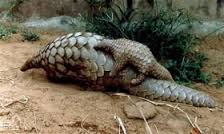
pangolin


Posted in Uncategorized | 5 Comments

Letter In A Klein Bottle

Kage Baker was not a hard science person; not unless you include hands-on disciplines like carpentry or blacksmithing, anyway. Truly complicated and diamond-level hard science tended to dazzle and entertain her: it was a marvel and she could never see the strings, so she enjoyed it.

Force fields, magnetism, energy patterns; as good as fireworks, for Kage. The electromagnetic maps that show the intricate coils of the Earth’s own magnetic field fascinated her with their intricacy and beauty. The very idea of magnetic envelopes intrigued her -like the Klein bottle, described as a closed, non-orientable, boundary-free manifold: a container both immaterial and yet impenetrable. And, of course, available from Acme Products in more mundane glass (www. kleinbottle.com). Along with rocket skates, pocket holes, and death rays …

Kage was confident humanity would develop space flight: just as soon as it could make someone lots of money. She watched the growth of companies like Space X with glee, and wouldn’t be at all surprised that they have now almost taken over travel to and from the International Space Station. The Luna Consortium and the Mars Corporation are only a matter of time. The military has pretty much dropped the space ball, as she always suspected they would. But she believed that because she also believed in the inevitability of heroes and homesteaders.

She researched such scientific topics as her stories required with determination, but she wasn’t interested in most of the basic concepts. As she observed, a lack of talent in a field can be compensated for by dogged study – but nothing would fill  in the gaps left by boredom.

However, Kage always made a genuine effort to comprehend anything she thought she needed for a story. Even if the concept was not explicitly explained in her text, she felt it was necessary to at least have a painted savage’s idea of what was going on.

“Why aren’t there Cliff Notes for FTL drives? Or at least thuribles*?” she’d moan.

“You mean an ansible,” I would snicker. “Unless you want to send smoke signals.”

“Oh, screw you. Find me whatever the hell will let people on Mars talk to Earth without a half hour hole in the conversation!”

In the end, she decided to leave the gap in, for dramatic purposes. But first, she researched the concept of ansibles so she at least understood how they were supposed to work, and what it meant when they didn’t. The actual mechanics of either the problem or its theoretical solution were irrelevant, except in supplying the plot with dramatic tension and a time line.

Conversely, it’s an ansible using the energy of time travel itself that allows the 24/7, real-time connection of Operatives to the Bases through their ubiquitous credenzas. The Company needed the device, for the exact same reasons that Kage decided Mars I and II did not. Not to mention Alex and Captain Morgan en route to their disastrous rendezvous with the MAC …

Luckily, it’s also been obvious throughout the history of science fiction that some devices are as universal as they are imaginary – and FTL drives and ansibles are pretty much the top of the list. (“Ansible”, in fact, was coined from Prospero’s thin air by Ursula K. Le Guin, and has now become a common use-word: like Kleenex, or Xerox. But it owes its birth to Madame Le Guin, who is seldom credited sufficiently for the vital word. Thank you, Lady!) They can be used in genre plots without invoking the attendant physics that make them work, and in fact most authors don’t bother to explain them.

However, each writer probably does have some private concept of how the machinery of their Universe works. It may not be explicable – which is why it hasn’t been included in the text. Or it may be based on some private line of reasoning that the writer is loath to share: either because they know it’s arrant nonsense or because they fear the Men In Black will come steal the idea. Frequently, though, it’s based on the projection of developments in some field of inquiry that does indeed exist – magnetism, ion production, fission, fusion, or layers of oysters on the hull* …

Kage not being terribly interested in interstellar flight, she simply didn’t get into superluminal engines at all. Antigravity, artificial gravity, and improved attitude jets gave her interplanetary shuttles all they needed to wend their ways between Earth and the rest of the Solar System. But she did have an idea of how it all worked. There was a process in her mind, because otherwise – how could she have written about it? She had to know how it worked.

She declined to discuss it much (especially with readers who wanted to know precisely how Time Travel and Antigravity worked) but she figured they tied in with Newton’s Third Law of Motion. The special circumstances that allowed them to work were in the source of the original movement, and in the substance being acted upon. Those, per Kage, were Clarkian Magic: Any sufficiently advanced technology is indistinguishable from magic.

That combination was enough to her to form a working model in her mind; one solid enough to be written about. A few more details occurred to her as time went on, and as her research continued. But those were enough to start the whole thing in  the first place.

All this is at least one answer to that deadly question: where do you get your ideas? From the fabled Post Office Box in New Jersey. From a scribbled note in a Klein bottle washed up on Pismo Beach. From somewhere in a nest of snakes …

And all of them biting their tails.

Acme Klein bottle with philosophical accessories

Acme Klein bottle with philosophical accessories


* Look it up, kids, as my own teachers always told me.

Posted in Uncategorized | 2 Comments