How The Stories Boil

Kage Baker had many favourite places to look for story inspiration. Every writer does, I guess. Some are tried-and-true wells of ideas and dreamscapes. Others are the 7-11’s of prose – garishly lit places on the edge of a wide expanse of cracked pavement, where you go to get a fast FTL burrito or see if they still have any of those stale but yummy dystopias on sale.

Write what you know is, of course, the received wisdom for writers, However, that doesn’t work as well for writers of any kind of speculative fiction. And the “literary” writers who claim it for their sanctified motto are fooling no one but themselves: very few people who actually live lives of dramatic passion or horrific tragedy or even suburban mundanity actually write books about it. How many romance writers have really had the kind of sex they write about? Have they ever even had the electric “eyes across the crowded room” experience? Kage used to ask that scornfully, roll her own eyes, and observe that the only thing that ever got her was a bartender with another Singapore Sling.

All is grist for the writer’s mill comes a little closer. Kage preferred it as a war-cry, certainly. As she always said, truth is not only stranger than fiction, it’s more interesting – thus, the bizarre moments of “Real Life” were a constant mine of scenes, dialogue and plot for her. I suspect they are for every writer who has every managed to walk a plot from A to B and not fall in the narrative stream. Life is a random number generator, and paying attention ot which way the little balls come up is endlessly productive.

Do you realize that most people don’t even notice the oddities and wonders that overrun their daily lives, Dear Readers? Do you – or they – realize that other people are taking fascinated notes on all these happenings? Why do you think you end up in books, folks? Writers who are in on the Secret Theatre are watching your every move. Bwa-ha-ha.

Their own lives, not so much. I think it depends on the writer; Kage felt it depended not only on the writer, but their vanity. How enthralled are you with the antics of your family? Your self? Can you take your eyes off the mirror long enough to write about someone else, or are you observing the rest of the world backwards and wrong way round in the rear view all the while? It may not matter which you choose – good writing can come from both. But Kage preferred not to use her personal history too much. Not only is a prophet without honour in her own land, she used to say, but even the prophet doesn’t care what happened there.

The heat that had actually scorched her in real life was more than she wanted to encounter again.

Her mother, bless Katherine Carmichael Baker’s goddess-sized heart, wanted Kage to be a writer. Consequently, Kage swore she never would do that, and ran off to join the circus. The circus in question being the Renaissance Pleasure Faire, she promptly fell  down the rabbit hole and became … a writer. She fell so far down that polychromatic rabbit hole that it coloured every other Universe she explored in her writing.

Eventually, that calmed Kage down enough to use some of her own, personal history as well. Many of the tales of the Company could be labelled “Based Partially on a True Story”. Some are so very personal Kage would never identify them to her family members, for fear of permanently offending various siblings … some she refused to write until her parents were gone, in fact. I suspect that happens a lot to all writers, too, a lot more than is ever described in the writing guides. There’s many an awkward Thanksgiving dinner, I bet, behind all those books about bridges and notebooks and coming-of-age …

But more – Kage didn’t find that her Life Before Writing really held that many treasures for her stories. Her mother wanted her to write the fabulous history of the Bakers, Carmichaels, Jeffries, Hickeys, etc. – and a lot of it is fabulous indeed. I listened too, as Momma Baker related the amazing family stories; Kage often rolled her eyes and let the over-familiar stories fall out her ears again, but she remembered them. Sometimes she used them. More often, she used other people’s families.

Sometimes, as an exercise, she’d take a few random elements from her memories and throw them in the air: literary 52-Pick-Up. Maybe a story came out of it, maybe not: it was a finger exercise, a limbering-up, a fabric swatch knitted for gauge.

So …  let’s see. It rains late in an unnaturally dry season; strange plants grow large. A young girl tells off an old relative for being  – well, old. She discovers that old women can be judgmental, cranky, mean girls long after you think their juices have dried up. Sometimes their lives are as vital as a young girl’s might be; sweet verjuice has fermented and distilled into bitter brandy … A new jewel arrives from the hand of a messenger and Means Something. A goddess manifests. Or a new will. Or a broken water main.

Could be a story there, you know. Or maybe it needs a bit of weird spice from the botanica display on the front counter of that eldritch 7-11.

In the end, you have to brave the heat and stir what’s boiling. And season to taste.
 

Posted in Uncategorized | Tagged , , , , | Leave a comment

What Grows On Her Grave

Kage Baker was always curious about what her legacy would be.

For most of her life, it never occurred to her it might be anything, you know – loud. Fond memories by her family members, maybe; some good stories from Faire, where she spent some of the most creative moments of her life. The Green Man Inn, at whatever Faire I was still doing in my old age – she was fondest of that idea, as the Inn in all its permutations came pretty much out of Kage’s head entire.

As it has turned out, however, what she is most remembered for are her stories: especially, the Company tales. Novels, novellas. myriad short stories – all comprising the special Universe of what is now regarded as a remarkably popular and successful time travel series.While this is no surprise to me, Dear Readers, it really was to her. And she considered herself incredibly fortunate to be able to know, for certain sure, that these stories would live after her.

In a singular honour, the splendid Tor Books – long one of Kage’s publishers and champions – has just selected her work for one of their wonderful Re-Read Projects. Have you followed any of these, Dear Readers? They are great. Whoopie! Stefen Raets, a long-time friend and supporter, has been chosen to conduct the re-read, and I know he’ll do a wonderful job. He let me know about it some time ago, and asked me to wait until today’s announcement on tor.com – which I did, with nail-biting impatience. (It’s why you notified me first, Medrith!) You can read the initial description, along with Stefan’s plans and intentions, here:

http://www.tor.com/tag/the-company-reread/

He’s going to be posting on a weekly basis, Dear Readers, and I heartily recommend it to all of you. I’m certainly going to be reading it! I happen to think Stefan has an interesting view and grasp of Kage’s work, and I look forward to seeing what he has to say. (He has kindly implied I may get to say a little myself, too.) Huzzah for Stefan Raets! Three cheers and a tiger!

Kage would be completely zooed. To be remembered as a writer, for her stories – that was always the utter height and depth of her desire.

It only became obvious to Kage  that this would stand as her primary legacy in the last few months of her life. That was when she finally permitted the news of her illness and approaching death to be made public, and when I spent every single evening reading  the grateful, affectionate, tender letters that flooded in from her fans. There were hundreds, most with intensely personal stories attached. Kage was so thankful, so honoured, so amazed and delighted, to learn that she had pleased all these people … that her own Dear Readers had understood what she was trying to say. She said, 4 days before she died, “Hey, my life was not in vain! Not everyone gets to know that, do they?”

“Oh, you dummy,” is what I said (sensitive as ever) at the time. “Of course your life was not in vain! Look at the shelves! Look at the piles of letters! Are you fishing for compliments at this late date?”

“Ah, screw you,” Kage replied, unperturbed. “I’ve got to take my fun where I can get it these days. Most people don’t get to know they did things right, do they?”

No, kiddo – they don’t. Even fewer of the fortunate few get to know that they succeeded on their own terms, as well; doing something they wanted to do, something they insisted on doing, something that won them a life lottery with worse odds than betting on a 3-legged horse in the Irish Sweepstakes. You were, as ever, an anomaly blazing bright in the mundane firmament of a world that you forced to listen to you.

Though I will tell you in your ear, in a whisper, now … I had rather you had lived in doubt a few more years, before finding out for sure your name would be immortal. I’d be proud of you anyway. I’ll admit, I am so proud today, I keep leaping up and dancing round the room with Harry. Did you need to die, though, to be assured you would live forever?

Maybe that’s the way it works. But – I wish that it did not.

Posted in Uncategorized | Tagged , , , | 3 Comments

Let Simple Carbohydrates and Plant Alkaloids Reign

Kage Baker loved chocolate. Anyone who knows anything about her, knows that. Her devotion to theobromos was not at all an assumed posture, either, nor an attitude she took on for the promotion of her Company stories. It was a devout and authentic affection.

The Company stories were one of the ways Kage immortalized, publicized, deified, advertized and otherwise made much of things she liked. People who should not have died. Cities that should not have fallen. Art that should not have been lost. Foods that went extinct, or fell out of fashion, or were vilified at intervals by the ever-changing whims of nutrition. Chocolate has been repeatedly pilloried and then made respectable again over the centuries.

So has sugar. So has alcohol. There are always foods being declared bad and then discovered to actually be of benefit; one of the most recent additions to the Naughty List of comestibles is grain, especially wheat. Caffeine has gone up and down like a yoyo on the Good/Bad scale. Dairy products are also now bad for humans: despite all the trouble that was gone through in the pastoral societies of Eurasia and Africa to develop lactose tolerance genes, cheese is now held to be as addictive as heroin, and milk makes you fat and it’s all Beast Slavery besides ….

Kage’s opinion was that nutritionists and old wives have a natural intolerance for simple pleasures like carbohydrates and plant alkaloids. The majority of eaters in the world, however – i.e., the rest of us – have an inborn fondness for these substances. Coffee! Tea! Cheese! Chocolate! Sugars! Alcohols! Fungi! Bread! Best of all, coffee, tea and chocolate with sugars in them, or water with grain and sugar and yeast!

You, Dear Readers, may well have discovered in yourselves dangerous sensitivities to some or all of these emotionally charged substances. I’m not criticizing anyone who has; take care of yourself, by all means.  However, I object to being told I have to change what I eat because someone else doesn’t like it. That happens far too much lately, and then 2 months later it turns out the despised foodstuff will save you from strokes, or cancer, or vampires … teach common sense to people instead of horror stories, and maybe they’ll eat more intelligently.

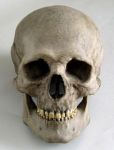
Or maybe not. I’m not sure that will matter too much, in the long run – there are 7 billion of us already. As Kage noticed, humans have expressed an unlimited enthusiasm for sugar, alcohol, carbs and alkaloids – even more than for meat. I know a lot of vegetarians who blanch at the idea of a lamb chop, but happily partake of a craft beer. Kage observed that life was too short to worry constantly over whether or nor you could drink a cup of coffee or eat a chocolate bar … and no matter how careful you are about your diet, no matter how thick you paint (as Shakespeare says), you will come to this:   skull


Not that this is a downer. Kage took it as a sign that life is full of goodies and we should all enjoy them as much as possible. The only political correctness that should apply to food is whether or not everyone has enough of it. Otherwise – eat what you will, don’t be a jerk, and say thank you to the vagaries of nature and chemistry that give you these things to make you happier.

It’s Easter today. If you are not of the Easter persuasion, no problem – it’s still a Spring day, and a good time to be nice to yourself and those you love. The human world is all too willing to poison, shoot or blow you up: everything you do to spread love is an improvement, even if it’s only one small jelly bean to one small child. Have a beer, share a sandwich, paint an egg, feed some people.

The resurrection of the world, Dear Readers, is not a one-time event.


Posted in Uncategorized | Tagged , , , , | 4 Comments

Friday

Kage Baker always looked on Fridays as evaluation days. As the putative end of the work week – which mattered a lot more to her than anyone’s Sabbath – she regarded them as sort of general quality control days. She’d meditate on the week that was, and decide if it needed to be celebrated, endured, cured, loftily ignored or run away from while screaming.

Some Fridays, we went home from work just to pack a parrot and 2 overnight bags, and light out for the Territories. Kage would put on the Eagles’  “Voyage of the Sorcerer”,  in a mix tape she had made that had, like every version of it she had ever found, and we’d head for the closest border as fast as we could go.

Today is another Friday. It’s got many good things going for it. Spring is here in Los Angeles, the air smells of roses and barbecues and mock orange blossoms, baby animals are everywhere and none of the skunk toddlers have sprayed the dog yet. It’s warm and sweet here. We have seasonal See’s chocolate novelties waiting in the wings for their cue. There’s a hummingbird nest outside the kitchen window, and roses are blooming in the yard.

However, turning on the television or checking the news in any medium at all reveals that the world is raving, bleeding, smoking, burning insane.  This is a hell of a lot of weight on the bad side of the scales, and I think I can hear the hinge creaking.

, Now, Kage was a Christian. Being also an historian and a writer, she cherished the various pretty myths and fairy tales that accrued to Christianity over the millennia – and please, don’t be offended, but there are a lot of simply pretty stories that have nothing to do with the theological core and canon. A lot of them have to do with Easter; which is only logical when you consider that the sacrifice of the Incarnate God is the ultimate point of the entire religion …

Kage especially liked the story of the kallikantzaroi. They are satyr-like Greek demi-urges (or something) that spend the 10 days of the Easter Season sawing through the trunk of the World Tree – the intent being to end the world, of course. But at the last minute, they are always chased away by the sound of the Easter bells (“Ring-a-ding, the bells, gnash gnash, the teeth, clackety-clack the hooves, etcetera.”)* For some reason, this scenario charmed her, and she would toast the kallikantzaroi and their doomed endeavours, in sweet white wine every Easter morning.

We spent a lot of Easter mornings waking up on Faire sites; usually in tents, as Easter often fell on a rehearsal weekend. Chocolate, painted eggs, baby animals, lots of people in robes with flowers in their hair, lots and LOTS of sweet wines – a good place to spend Easter morning, whatever your inclinations. It’s easy to believe in gods and goddesses and Spring, when you wake up in a tent in an oak grove with the sun rising, and small children giggling as they hunt woad-blue eggs outside your translucent walls.

But not this year. Not this Friday. The world is in a dreadful state at the moment, and my personal urge is to fail this past week with a big red F. And then go running for the hills, or the coast, or someplace green and fragrant where they meet; with my parrot and my chocolate beside me.

However, I’ll probably stay. My family is cooking a nice ham, and there are jelly eggs with nonpareils on ’em stashed away. Also a chocolate bunny with my name on it. And though I am not a Christian, it’s IS Spring. It’s an older holiday, but all the more worth celebrating for that. Flowers, and baby animals and all. You know.

Still … the kallikantzaroi must be working on overtime by now.

I’m going to worry about that World Tree until the sun comes up on Sunday.


* From This Immortal, Roger Zelazny

Posted in Uncategorized | Tagged , , , | Leave a comment

Right! Before! Your! Eyes!

Kage Baker was probably a tetrachromate.

I told her that once. She stared at me and said, “Don’t be ridiculous; I’m a registered Democrat.”

A tetrachromate is the happy possessor of a variation in  eye construction. They have 4 cones in their eyes, instead of the 3 that most humans have. Many birds and fish have this (or even more cones), but it’s rare to vanishing in mammals. However, some human females are so endowed. It allows them to see many, many more colours than the standard issue. And, of course, they are mutants – demonstrating a victory in the ongoing crap shoot that is evolution.

(I’ll admit, it seems likelier these days that you’d find a mutant in the Republican party.  But that was just Kage being funny. Also, letting me know I was being deliberately obscure, and she wasn’t having any of it. And that’s my political snark quota for the year, Dear Readers.)

Colour vision is common among primates – all Old world primates have it. Humans are, by virtue of their African origin, Old World primates; only about 10% of humans, mostly male, are colour blind. However, most of the New World primates lost theirs somewhere along the road when the family split and moved away. Some New World monkeys have re-evolved it. These exceptions are mostly female, interestingly enough – female squirrel monkeys, for example exhibit trichchromatic vision, while their males do not. Both male and female howler monkeys have it, but  it appears that innovations in primate colour vision are primarily centered on the ladies.

The tetrachromate primate mutation has so far only been observed in human females. As I said, it’s an extra cone in the eyes and gives the bearer access to a lot more colour sensitivity. It’s been know for some time. A recent study, though, describes some interesting details about the trait:

http://goo.gl/nsMHEx

The main and most apropos-to-this-blog details are:  1) more women probably have this than was originally thought;  up to maybe 50% from an estimated 10%. And 2) actually using the ability may depend heavily on early training. How do you identify extra colours for which no one has any words to teach you? You mother may happily identify for you the differences between blue and purple, but what about the 4 shades that fall between royal blue and ultramarine blue? What about the colours between light green and light yellow? Above violet, or below crimson?

Humans potentially see 1 million colours, and don’t have names for most of them. Tetrachromates probably see about 100 million colours – if they learn how to see them. Otherwise, it’s entirely probable that most of these little girls will never learn to see what their eyes can physically detect.

Since we don’t have a secret mutant Amazon society of tetrachromates out there collecting little girls with huge crayon collections and spiriting them away for special training (at least, I don’t think we do. Not really … ) the best way to ensure this would happen is to make sure baby tetrachromates are exposed when very young to mature tetrachromates who can teach them the difference between emerald green and natron verdigris. But we can barely identify tetrachromates at all yet, and there is no established vocabulary for the extra 99,000,00o colours they might see.

The next best way to make sure that little tetrachromates learn to use their ability is to expose all little kids – but especially girls – to a lot of art and art training. It doesn’t have to be exceptionally technical, and they don’t have to be artistically inclined. All they need are parents who encourage them to see and use and appreciate colours, to use crayons, to experiment with textiles or water colours or Play-doh or sidewalk chalk or makeup. Teach them to freakin’ match socks, for heaven’s sake. And never ever tell them that the colours they see aren’t real.

However, I digress. Kage’s mother was a professional painter. Learning at Momma’s knee meant sitting under an easel, and under a constant maternal waterfall of comment and explanation. Kage herself was a talented artist, in water colour and ink and acrylic.She learned what she needed to learn, to use her eyes. Most people literally cannot see red and blue side by side, at the same time – she could, and see besides a brief spectrum between the two. I can’t.

Kage was raised in a colour-saturated environment; she saw colours for which she had to invent words  -at which she was also pretty talented. She just took it for granted that other people didn’t see them; she often wondered if what she saw was part of her migraines (and it may have been). I know she saw a little ways into polarized light – she saw a flash before the lightning flash, in a colour she said was a “kind of gold-violet”.

So I figure she was a tetrachromate. She used the idea to describe Mendoza’s reaction to Alex’s expanded sensorium, when she taps into his mind. Mendoza, who was a human woman, is not a natural tetrachromate; Alex, who is not a human man, probably is.

So, They walk among us, Dear Readers. All sorts of Them, actually; tetrachromates are just one kind, as evolution mindlessly tries out new and interesting combinations. Maybe you’re one of Them (I have my suspicions about you, Medrith …). Maybe you’re one of the other Thems: maybe you can taste phenylthiocarbamide or hear ultra-sound or detect blood type and disease by scent.  There are humans who can do all these things.

You know, Dear Readers, knowing your colours used to be one of the requirements to enter kindergarten in Los Angeles. Not any more, though the teachers do try to make sure their little charges at least leave knowing their colours. Even when the teachers have to buy them crayons themselves …

Do you wonder, at all, at all – what are we losing, besides tetrachromates? I surely do.

Posted in Uncategorized | Tagged , , , | 3 Comments

What The World Has To Offer

Kage Baker detested politics.

She regarded as one of the most unpleasant duties of adulthood, the necessity of becoming familiar with political trends, tendencies and psychopathies. And yet, it had to be done, because otherwise one could not vote responsibly: which was part of the price for living in the (relative) freedom of the United States of America.

As a woman, an unmarried woman, an unmarried woman supporting herself, an unmarried woman supporting herself and being of Native American descent (even though it didn’t show), Kage was acutely aware of her moral debt to all the women and freedom fighters who had come before her. She felt she owed it to them to be informed, to vote, to fight villainy and try to pass on freedom to the next generation.

(Kage never made a big deal about being 1/4 Native American. Living here in California, she felt it would have been tacky to claim tribal status with a tribe on the East Coast – one with lots of members, who needed tribal resources more than she did. And in California, even if you claimed status with a Northeastern Woods tribe (like the Iroquois) you know what you got, in the 1960’s, 70’s and 80’s? Free access to silver and turquoise jewelry making supplies. Which are not exactly  relevant. So she told the weird story of California state-sponsored cultural sensitivity whenever the occasion arose, and forged ahead on her own. It was, she felt, the responsible thing to do.)

Even though she hated politics.

Kage stopped reading newspapers, as she got older. She stopped watching the news, unless something locally interesting happened. You know, a puma in the Dunes, a bear strolling into the 7-11, a surfer catching a shark by hand off the Pier … when elections came around, she carefully read all the pertinent brochures and position papers, and checked with the larger newspapers – the New York Times, Chicago Tribune, Washington Post.

Watching disasters upset her, so she did not watch those – unless there was a local brush fire, and then it became common sense to keep aware of the fire line. (It got close a few times, too.) She did watch car chases, with a guilty fascination, because she couldn’t believe people actually thought they’d get away. And also because, in car-culture California, when a local car chase is on – it’s all you get on the news. The news outlets are addicted to those things.

So Kage trod a delicate line between being informed enough to vote, at least a little aware of the world’s status, and yet not so deep in dreck that she drowned in despair. One of the things she loved about the Internet was that it was easier to completely avoid seeing news if you really didn’t want to see it.

I kept up in more detail; as with her fan letters and reviews, I supplied Kage with careful translations and analyses when she wanted some. But I’ve been repeatedly glad, these last 6 years in Los Angeles, that she doesn’t have to watch the Highway to Hell we all seem to be taking.

The current Presidential campaign would have had her applying for a passport – something she said she would never do, because she couldn’t imagine wanting to leave the country of her birth. The prospect of a Trump or Cruz Presidency, though, would have driven her out like the fairies from England.

Kage was devastated when the Twin Towers fell, like much of America. The wars that followed did not reassure her – like much of America. The rise of Islamic terrorists would not have surprised her – she was an historian – but it would have filled her with black sorrow.

Mind you, good things happen too. She’d have been delighted to see our relationship with Cuba normalizing, for instance. But yestreday, as Presidents Obama and Castro took unprecedented steps toward peace and communication – Brussells was bombed. They’re still identifying pieces of Parisians, and now Belgium is smoking.

I’m glad she isn’t seeing any of this. I wish I wasn’t. But, there you are – it’s something adults have to do. To keep my own sanity, I’m going to go do research for awhile, and see what animals and plants and treasures have been saved from humanity recently. I’m going to write about Mars rising from the ashes, and squirrels curing disease; and maybe – because the news is bad and ideas do come from everywhere – about whether evolution has decided to get rid of our meddling monkey selves by engineering a way to make sure our kids are born as Homo erectus …*

At the moment, that doesn’t seem like an entirely bad idea.


*Take a look at a child born with Zika Syndrome. Happy, healthy, cute little Homo erectuses.

Posted in Uncategorized | Tagged , , , | 3 Comments

Days, Quarter Days, Cross-Quarter Days. And Saturday.

Kage Baker always reverently observed the Quarter Days, the 4 great horological linchpins of the astronomical year. Two Solstices, two Equinoxes – tidy and convenient.

Everybody knows about these; all calendars show them, evening newscasters announce their coming to the  ritually uncommitted; a lot of householders use the dates to remember to change their faucet filters and turn the compost. Also, every 3 months there’s a nice excuse for a special dinner and a thematic cocktail. (Kage was a party girl at heart.)

If you want things divided still further, add in  the Cross-Quarter Days, the Lesser Arcana of the calendar. There’s an appropriate  observance about midway between every Solstice and its trailing Equinox, at least in the varying mythoi of Europe. These days, they’re more likely to have parties associated with them than the 4 Big Ones. Some have attached celebrations that most people are aware of; others have sunk below the precessional horizon. But Kage loved ’em all.

Between Winter and Spring, there’s February 2: Imbolc, also known as Candlemas, Bridget’s Day, Groundhog Day – depending on if your tastes run to goddesses, light or marmots.  Even odds on whether you’ll get a hard frost or a tide of early crocuses, but it’s a nice marker in the holiday dry spell between New Year’s and Easter.

Between the Vernal Equinox and the Summer Solstice, you can celebrate May 1st, Beltane: May Day, Calan Mai, Mary’s Day, Walpurgis. This is a folk favourite, even if you have no pagan leanings at all. Bonfires, May poles, yellow flowers, little girls in processions, flower crowns! It’s finally warm enough to stay out at night, and it looks like the fields have unfrozen for another year.

Between Summer Solstice and Autumnal Equinox, on August 1st, comes Lughnasadh. You’ll notice, Dear Readers, that I use the Celtic names first, and Lughnasadh is one that is mostly celebrated by Celt-esque neo-pagans. It’s the Harvest Festival, First Fruits. The Romans and Greeks celebrated one, so did the Christians – but except for some rural Christian churches with harvest blessings (and the good people of Summerisle in the Orkneys, of course), most people outside of the UK aren’t very aware of this one and do not mark it. Kage did, though. Party girl, remember …

And then comes the most famous one, the one everybody knows and loves – most of the world celebrates it now, even if most of the world is unaware of what it really means. I refer, of course, to Samhain – technically, November 1st, though generally observed on the night of October 31st: but the Celts measured the year in nights, and their holidays ran at night. Whether you call this one Halloween or All Saints or the Devil’s birthday (as some benighted Christians insist); whether it’s time to picnic on Grandmother’s grave, or run around dressed as a superhero demanding candy, it’s the last nighttime party of the year until the Winter Solstice.

Kage made a feast for our beloved dead every year, and handed out sweets to the little pilgrims at the door; I marked our doorstep with wine and grain and salt. We toasted the departed and ate a lot of chocolate, amiable observances shared with more and more of the world as time goes on. A nice thing, too.

Today, though, is one of the Big Ones: the Vernal Equinox, the first day of Spring. The hiccoughs of the celestial clock have arranged it so the actual moment of balance between night and day happens tonight – March 19, at 11:30 PM. Today and tonight, light and darkness are in balance, equally. The world spins in place, tiptoe  in Her ellipsis of an orbit, with the Moon twirling in Her wake like the poodle on a skirt.

And it’s Saturday, the faithful coming of which Kage always took as a sign of divine favour. I sent off another story to a new magazine, too. Good way to start the new quarter, I think. It’s still a chilly ways to go before we can all join the dance at Beltane.


Posted in Uncategorized | Tagged , , , , , , , , , | 5 Comments

No Pom Poms, Please

Kage Baker was not much given to cheer leading. She was suspicious of glee clubs, and school spirit, and group displays of passion and loyalty; to her, these were private matters and not to be pranced over in public.

She liked reassurance; she appreciated enthusiasm. She tried to give support to her friends when they needed it – but I never heard her exaggerate a trouble or a virtue in order to make someone feel better. Not even herself. Not even gloating or disparaging an enemy; and Kage had a few, although mostly they were not aware of the enmity. They only got a hint when they realized all they could ever see of her were her heels, as she climbed far above them …

But she’d give a pat on the shoulder to someone who had been defeated. She would comfort the cheated, the victimized, the disappointed: not by assuring them that they would, yes, get what they so obviously deserved, no matter how unlikely it was:  but that they would get better. By which she meant, “heal”.

Pain passes, fatigue is revived, sorrow mellows, disappoint is survived. You move on and you get better. Kage felt that was the ultimate reward, really, for diligence and strength. It was what she hoped for, when her dreams were unfulfilled. It was what she offered most often in comfort.

Not that she was opposed to a little purgative yelling and cursing. Venting was good for the soul, she believed. Briefly, anyway. For the rest of it … vengeance is better served cold, and best of all when the avenged-upon is left standing in the dust wondering what the hell just happened. Kage favoured the Roadruner and Acme school of revenge: while you were wondering what ever happened to that Kage Baker? …  a rock with her initials carved on it landed on your head. But she was long gone on a better path.

Today, I got my cranky printer back up and running, and printed out the entire 411-pge bulk of my latest novel.  Actually, my clever nephew Mike did it, and supervised the entire run; now the thing is working perfectly, and I can print anything! The horse-choking MS is all boxed up and addressed and stamped, and as of Monday will be on its way to my agent. They tell me editors like ginormous email attachments (which I duly sent) but for them – hard copy, please.

Also, today, my most recent short story was rejected. No feedback – but the specs had asked for “literary” science fiction or fantasy, which I evidently did not accurately achieve. Maybe my submission had too little moon light or chiffon. Maybe it was bad (it could happen!) Maybe what they wanted was fan fiction. I don’t know and it’s all right – it’ll go somewhere else. In the meanwhile, I’ve been working on the sudden inspiration for the ending of “The Teddy Bear Squad”, and am pleased both at the essential motion of work and the way it is progressing. Like, at all.

“The Teddy Bear Squad” is a Company story, and it will be submitted first to Asimov’s. They may well turn it down, but I owe them first look. It makes me happy to be responsible for that small courtesy, and to know that I can actually send them one soon.

No cheer leading. No applause. None needed. Just the satisfaction of having work, and doing that work, and seeing that work pile up tidily on my desk and my screen.

Happiness is 4 pounds of novel waiting for the post.


Posted in Uncategorized | Tagged , , | 4 Comments

Rain On Down

Kage Baker was a firm believer in the adage: “When it rains, it pours.” Even though it didn’t mean what she thought it meant. And even when she found out what it did actually mean – it didn’t mean that.

It is the motto of Morton Salt, of course, and refers to that salt’s superior pouring power. Supposedly, Morton’s salt doesn’t clot when it rains. Which is a foreign idea to a Southern California kid, anyway. It does not refer to the fact that when it rains, the rain pours down heavily – which was what Kage thought when we were kids. But then, she was reading the labels on every container in the kitchen by the time she was 3 or 4, and her grasp of the principles of the world was not as secure as her grasp of the alphabet.

She ultimately took it to mean abundance – cornucopia – a generous Fate. As she said to me in a later discussion of the properties of Morton’s salt:  “I know, I know:  it means that the salt is magnetized or mentholated or something to prevent you getting goiters, but who cares? It’s a neat description of goodies falling from the skies!”

This was a great example of Kage’s Sherlock-Holmes-and-the-heliocentric-model-of-the-solar-system Syndrome. Morton’s salt is neither magnetized nor mentholated – either of which staggers the ordinary imagination.  What it is, is formulated with magnesium carbonate, which lessens its tendency to cake when it gets damp (though you still need to add rice to the salt shakers if you live in a beach town … ) And while Morton’s does come in an iodized version, to enhance thyroid health and prevent goiters, that’s got nothing to do with its anti-clumping tendencies. But in Kage’s world, it did – and pouring when the rains came meant Dame Fortune was playing the Lady With A Thousand Pockets, and there was chocolate and fireworks in every one.

So when a week brought royalty checks, and contract requests, and submission approvals, and nice fan letters, and a J. Peterman catalog, and a new story idea – “When it rains, it pours!” Kage would exclaim in delight, and dance around the living room with Harry the Parrot.

This has been once of those weeks for me, Dear Readers.

I got a little royalty check – which is never to be scorned. And I got a contract request for a story reprint – for actual money! – for “The Bohemian Astrobleme”. That’s one of my favourite stories, because we wrote it together very near the end of Kage’s life. And because the title made her laugh hard.

My agent acknowledged receipt of the new contract I sent them, so now I am once again represented. And one of the lovely ladies at the Virginia Kidd Agency has read through the e-copy of the new novel for the first time, and likes it. This may not mean a thing, of course, but being told someone at your agent’s office does, yes, like your new book is always an occasion for joy. And I got an idea while driving nephew Micheal to school this afternoon – you just cannot beat driving for story ideas, ever – which will allow me to finish off “The Teddy Bear Squad” brightly, brightly and with beauty … * And the first rose has bloomed, too: the Chrysler Imperial, red as a rabbit’s wings.**

So this is utterly one of Kage’s good weeks. So far, anyway; and it’s being so very good that I don’t think it can live down to a lesser standard at this point. Cutting off my hair seems to have loosened the constraints on my spirit, and things are being accomplished under my hands like sea foam running irresistibly up a beach.

And it’s due to rain this weekend, too. When, I have no doubt, it will extravagantly pour.

"When it rains, it pours."

“When it rains, it pours.”

*    Robert A. Heinlein, Stranger In A Strange Land

**  Carolyn Sherwin Bailey, The Little Rabbit Who Wanted Red Wings

Posted in Uncategorized | Tagged , , , | 9 Comments

The Season Is Changing Into Something

Kage Baker was a staunch supporter of California’s seasons. She knew the rest of the country mocks us for their lack, or for their oddity – she did not agree, though, and would explain at length, to the seasonally insensitive, how our seasons worked.

She considered that the need for gaudy colour changes, snowfall and tornadoes indicated a low threshold of attention. The true Californian, she felt, was in sufficient sympathy with the natural rhythm of the land to react to the seasonal changes without enormous neon-glowing signs. After all, the equinoxes and solstices happen here just like anywhere else; you don’t need giant stones or excessive weather patterns to respond to the changing light.

Not that Kage scorned the more common seasonal signs. Did you know, Dear Readers, that there is a native California maple? There is, and in the northern areas of the state entire canyons are flooded with them. Certain crossovers between Highways 1 and 101 (like Carmel Valley Road and its attendant maze of G-labelled County Roads) are a sea of burning colour in the Fall; we used to go drive through them just for the sight and smell, swigging cherry juice and drunk on the sugared oxygen exhaled by the dying leaves.

Conversely, in the Spring, we would drive up to San Francisco; along either Highway 101 or 5, when the orchards were in bloom in miles of pink and ivory blossoms. Once in The City, we’d go through Golden Gate Park to the Dutch Windmill off The Great Highway, which rises out of banks of hundreds of tulips every year. Quintessential spring, those drives. At Easter, we’d go North along Highway 1 until we got to the broad seal rookeries beyond San Simeon; there’s nothing more spring-like than eating chocolate eggs and strawberries while watching baby seals toddle on the beach.

But even without these indulgences in classical vistas, Kage was attuned to the subtle seasonal signs of California. When we lived a block from the beach in Pismo, or amid the oak groves in Marin, it was easy; but growing up in Los Angeles gave her some special sense to fell the round world wheeling under her feet. Maybe she was aware of the electromagnetic field; it would have been just like her.

Still, there are always indicators, both subtle and gross. The rain means Winter – inconstant as it is, it’s still likeliest to fall somewhere between October and March. The hills turn green; then we get floods, and mud slides, and sink holes, and all matter of interesting watery disasters. Even when rain falls every year, most LA drivers forget how to use their vehicles on wet streets; so it gets exciting.

But also … in Spring, the countless transplanted trees, that have stood brazenly naked all Winter, begin to leaf out again. a green mist forms in all the silvered branches everywhere, until suddenly the streets are canopied with silk. Some of them flower in the Spring; other save their blossoms for Autumn, so we get two shows a year. Gardens tend to start flowering in February and just go on until the next January – but if you remember what you planted, you can tell the season by whether it’s poppies or sage or chrysanthemums blooming.

Hot spells can happen anytime. But they’re mostly damp in the Spring and dry in the Summer; Santa Ana winds come in the Fall; frost only happens in the black heart of Winter. The anciently civilized plants – roses, tulips, crocuses, hyacinths, gladiolas – stick to classical times and so play at being calendar markers. Hot country plants – Californian and Australian and Mexican, lots of them – just carry on whenever they feel like it. They’ll tell you the hour or the temperature, but not so much the season.

But you get used to it. If you are an inspired gardener, as Kage was, you have California’s particular pattern in your DNA. If you’re also an inspired storyteller, you can teach it to botanically-challenged nits like me …

So I’m aware of the faceted little emeralds sprouting on the mulberry and the plums and the Chinese pistache: new branches are budding. The plums, as well, are covered in white flowers, delicately embroidered with blackwork patterns – fruit will happen! The rosemary has turned blue with exuberant blossom, and bees are singing everywhere. The hills are green in the sunlight, and slate in the shadows; crickets and frogs are beginning to creak at night.

Oh, and I have sent a novel off to my agents, Dear Readers, and submitted a short story to a magazine. Spring will happen.

I have it on the best of authority.

Posted in Uncategorized | Tagged , , , | 6 Comments