Random Fruits of Research

Kage Baker used research like a roulette wheel. She’d need to learn something – locations of post offices in Buffalo in 1943, or how long it will take a Hot Wheels car to decay, or a place to eat zuppa inglese at 11 PM in Marin County – so she’d dive into research. But as she jackknifed into the data stream, she’d give that wheel a random spin. Just to see where she might surface …

At worst, she’d get, say,  dessert out of it; at best, a story. It might be the story she was writing at that moment, or it might be something else. For instance, we learned during the hunt for immediate zuppa inglese input (which took place late at night and thus was in restaurants rather than libraries) that  zuppa inglese is yummy but should not be eaten in mixed company.  Not late at night in an Italian cafe full of rowdy gorgeous soccer players. Not unless you want to embarrass your escort so much he leaves the table to 4 giggling ladies making off-colour jokes about their dessert.

On the other hand, we got to split his share while he was pretending he didn’t know us. So it was a win-win situation. You just never know what research will yield, and so you have to be prepared to profit from whatever you find.

A search on early photographic experiments led from geranium leaves, to Roman sunglasses, to salt mordants, to grade school experiments with watching solar eclipses without (quite) going blind, to the Griffith Park Observatory where we took turns testing the field boundaries of the camera obscura in the west gallery. Which largely involved dancing back and forth in the lawn in front of the lens and fascinated Japanese tourists. Then Kage ended up writing a story about Vermeer.

When we were young, she would wander around libraries and bookstores, selecting volumes at random and reading bits of them. She usually chose a book by colour and/or cover art – the subject didn’t matter as much as the art – and she always began her browsing in the middle. (Even when she read a book on purpose, she read it in bits and pieces and out of sequence. I don’t know how she ever made sense of it, but she did.) When something caught her attention, she’d pursue it in another book. She’d sample 2 dozen apparently unrelated books while I hunted obsessively for volume 3 of a series I’d accidentally donated to a library drive. I’d leave with a book on the Permian Extinction, and she’d have one on embroidery patterns designed by Ernest Theisinger …

Embroidery patterns, by the way, led to fractal repetitions and Mandlebrot sets. And to the delicious pastry, like primordial uber-biscotti, of the same name. So Kage learned to make mandelbrot and biscotti, and her concept of the shape of Time became a Mandelbrot set with no end points. And she ate mandelbrot while writing about Mandelbrots.

Kage’s sure-fire recipe for not getting bogged down in the ordinary world: avoid reality at all times.

Tomorrow: the computer revolution in her methods of madness

Posted in Uncategorized | 2 Comments

Divers* Joys of Research

Kage Baker loved research. It was a professional necessity, but she also just liked it. It was her favourite game, the ultimate jigsaw puzzle. She’d spend days on topics with no point beyond personal interest, or a chance glimpse of an overgrown road. She would spend whole weekends pursuing links through every connection she could  find online. It often yielded story ideas but she would have done it anyway – it was her private version of a hunt, alone out there in cyberspace in pursuit of a previously undiscovered fact.

I spent a lot of time on maintaining virus software.

Professionally, of course, Kage championed research and always lectured sternly on its necessity for any writer – not just as a writer in general, but because she wrote hidden-history and fantasy and science fiction. Those genres may not seem to technically require research; but the holes that show in the finished story if research is neglected are actually much more obvious than in non-genre fiction.

Science fiction fans are a lot more likely to realize you botched the description of fusion in your dramatic battle for control of the reactor, than general fiction fans are to complain about the 1982 hem length description in your Bryn Mawyr college romance tale.

Except for the inevitable history geeks, who will find every single error in any period more than 25 years old. Write a story in any time period more than a generation past, and somewhere there is someone who is: 1) an expert; 2) a pedant; and 3) in a really bad mood. This is one of the reasons it is so important to do your research – so your life may be long and peaceful in the land the Lord has given you, and untroubled by the freaks who write letters to complain that you painted the curb red on the wrong side of the street.

All writers get them, of course. Science fiction writers may get more than most writers. And there is a small but very vocal portion of science fiction readers (I am not sure they’re fans exactly) that write in to complain about …  antigravity. FTL drives. The specific appearance of specific aliens. Telepathy, transparent aluminum and continental drift on Mars. The usual complaint is that the writer has gotten the details wrong, which makes for some very scary letters when one realizes the letter writer claims precise and personal knowledge of these matters. But there is also a portion that complains to the writer that these topics are not real.

After trying polite demurrers for a short while (dictated to me – Kage wouldn’t read these letters personally nor directly respond to them, either) Kage took to just asking, “Do you know why this genre is called Science FICTION?” And she got answers back to the effect that they knew it was science fiction but they didn’t really like that silly fiction stuff, so could she please right something that was more scientific and less fictional?

They often had suggestions, too. Oddly insistent ones. Like, that time travel stuff was a waste of effort when there was a whole city of Lizard Men under Los Angeles, and so why didn’t Kage write about that? (They supplied references and maps …) Why didn’t she mention the real Martians? (She did.) She should have written about real Indians, not a made up tribe like the Chumash. (Um – they’re real.) They had proof about who had burned the headless dinosaur out by Mystery Cave! (Long story and sounds like a Scooby Doo episode …  real, though.)

As you can see, the other problem that arises with the letters from reader/researchers is the temptation to argue with them. Sometimes their assertions and complaints are so peculiar that one could happily spend hours coming up with witty responses. Sometimes they are actually interesting, which eats up even more time that should be spent writing. And sometimes their comments are so weird that any reply at all is a mistake, and you end up reporting them to the Post Office and the local FBI stringer when they begin detailing their service in CIA Black Ops and how it has enabled them to locate you even though you did not put your return address on the letter you did not send them but that they intercepted anyway …

Sometimes it’s just not worth talking to real people.

Research, though, never fails. So I am off to peruse a little gem I found a few days ago: an extract from Pigot’s 1830 Directory of Devonshire, with its fascinating lists of “Nobility, Gentry and Clergy”. Just think, the Dowager Countess of Guildford lived there!

Tomorrow: more research

*Archaic usage implying abundance and diversity
Posted in Uncategorized | 6 Comments

Glitter Pumpkins and Faerie Lights

Kage Baker was an enormous fan of seasonal lights. It started with Christmas lights: when we were little, those were all there were. They were like a hot-climate aurora
borealis, curtains and strings and fountains of lights in winter darkness.  At the house, a comet went up every year on the top of the tower where Kage made her bedroom, trailing the lines of its tail down into the roses of the garden.

Disneyland introduced us to the idea that lights could be for all year round. The white lights in the trees: those were the most elegant decorations we had ever seen. Kage always thought they were one of the best parts of the magic kingdom. She loved the faerie lights, those tiny white lights in the manicured trees.

When we grew up and had moved out, we decorated like mad for Christmas: lights everywhere. In colours, and three sizes, and with special effects. No silly tableaux or messages: just the clouds and nets of coloured light that had fascinated Kage from earliest childhood. With a ladder and a rake and Kage to hand me the right end of the cords, I could rig lights on anything. And I did. She had her faerie lights in the trees, all right; I wrapped the walls and garden in them, from the potted roses by the front door to the brass sailing ship weather vane on top of the garage.

Eventually, party lights came into vogue: plain lights in every colour of the rainbow, sets of lights in delightful weird shapes: fruits and vegetables and cows and geckos and palm trees and flitches of bacon. And jack o’lanterns. In fact, Hallmark first came out with Boo! Lights (harmlessly smiling little pumpkins) more than 20 years ago, and we put them up as soon as we found them.

Now you can put up a much wider, wilder, wickeder array of Halloween lights, of course. There are eyeballs and assorted viscera; little glowing brains; the undead in conditions varying from a decently closed string of coffins to rotting zombies to defleshed skeletons. It’s all in good fun, of course, and with the introduction of LEDs the colours are simply grand! Not to mention thunder and lightning machines, fog makers, Jacob’s ladders,and vinyl snowglobes as big as Volkswagons and full of purple bats.

We stuck to the faerie lights, though, me and Kage; orange and purple lights, and a modest string of those little smiley pumpkins. It’s really what she liked the best: coloured lights are their own justification, she said, they don’t need to be tarted up with blood and gore.

I’m living with another sister this year, but she too is an aficiando of lights. Things are a little different; everyone has their own favourite colours and symbols. But it’s pretty much the same  … there are now gold and orange and russet lights in the trees and round the windows; a curtain of blinking spiders and their glowing web is going up later. I may indulge in some crystal skulls, for their esoteric alien charm; already, we’ve got a string of fancy glittering jack o’lanterns on the window. (They came in colours and were irresistible.)

Come November, I’ll replace the bats and pumpkins with elegant autumn leaves. You can get glowing turkeys, but so far I’ve managed to resist … and in December, it will be back to the classics, all the colours of jewels and ice.

For now, though, it’s a season of license – time to dance a little in the drifts of dry leaves skittering down the sidewalk, and leap at your own shadow on the lawn. With all the tiny lights burning on the porch and the branches, it looks like a whole troupe of phantom Kates is dancing out there with me – a pavane  in  transparent gold and orange and red, a processional of pale flames. Every little lamp casts a facet of a shadow, and around me a thousand dancers are wheeling in a ring.

Pumpkin Lights On The Porch

Posted in Uncategorized | 3 Comments

She Had The Power?

Kage Baker made things happen. Well, naturally, everybody does – some better or more often or more deliberately than others. But, truth to tell, physics just doesn’t let any of us get away with not making things happen. This is evidently a major problem for those good folk attempting to escape the Great Wheel of Life.

But Kage could make things happen on purpose. I think. She had a very strange ability to catch things – fads, interests, new (or old) ideas – just as they reached some apex of attention-gathering power. She’d want to to know something, and suddenly everyone would be publishing information on it.

This happens once or twice to everyone, doesn’t it? You never, ever, heard of Toy Box Iced Biscuits. Then you read about them in an old book; and see them in an advert for Twinings tea; and then on EBay – and before you know it, a dozen references have hit you, and you’ve a mad craving for cookies you not only never heard of two weeks ago but that haven’t been made for 15 years. Right?

But if you were Kage … your Lancastrian step-grandmother would have fed them to you once when you were 6, and you’d find the last preserved box on earth online just when someone decided to make them again anyway. And it happened like that to her all the time.

She would develop an interest in, say, heritage apples – and suddenly legendary apple trees would be being discovered in back gardens from coast to coast. Most of all, people would find them where Kage lived, and she could taste them. In the 90’s, Kage wanted exotic apples; suddenly, in forgotten farms up tiny lost canyons in the Irish Hills of the Central Coast, wizened little old trees began bearing again. There were more every year. By the time Kage died, orchards were spreading over through the canyons like a millennial flood. There’s a fruit stand in the hills behind Avila Beach that now sells about 50 kinds of apples through the course of the season. People come from everywhere to buy them. We went there every week, Kage and I, and she ate her way through scions of 4 centuries of apples.

When she was a little girl, she read a story about a puffin, and somehow formed the opinion that puffins were extinct. This upset her profoundly and she cried about the puffins for years. When I found out what she thought and disabused her of the idea (she read fairy tales; I read nature books) she decided something must have saved them. In time, not only did this conviction give birth to The Company stories, but extinct animals did indeed start resurfacing. Why? From Where? Who shoveled extinct elk poop until a herd of pregnant females showed up in Buttonwillow in the 19th century? Where has the melanistic mountain lion been hiding for the last 20 years?

Why do people compulsively stash famous composer’s work in the cupboards of houses where they never lived? Renaissance artists seem to have ritually signed every 10th or 20th painting as one of their own apprentices – some kind of tithe? Early agriculturists went out of their way to write down recipes for … beer. (All right, maybe I understand that one.) Find one example of this kind of Odd News and soon you’ll have half a dozen: and they fascinated Kage, and when something fascinated her, the world poured information into her lap.

She made it happen, I think. Somehow. Maybe by the sheer magnetism of her interest and determination. That is the prime reason I think this story-telling gig may work for me. Kage said it would; she was convinced it would. She told me it would.

Apple trees listened to her. How can I argue?

Tomorrow: I need a source for augers

Posted in Uncategorized | 1 Comment

October

Kage Baker loved Halloween. It was probably her favourite holiday, despite the fireworks of July 4th and the buttered rum delights of Christmas. Halloween, or more precisely the month of October, was her heart’s delight. It was the pivot of the year.

Mine, too. Being born in June and July as we were, we must have been conceived in the autumn.  I always felt especially attuned to it, as if the autumnal twilight had somehow been visible in my mother’s womb. It does seems to be have affected us both, although Kage preferred the aromatic dust and warmth of Harvest, thank you very much: long golden sunsets and yellow lights in the windows when the sun was gone, the smells of cider and fallen leaves and a hot dinner on the air.

We used to take walks or drives at twilight, especially in Autumn, and admire the lure of lit windows and busy kitchens as we passed: Kage loved looking in other people’s windows.

“Look there, they have those weird ceramic ducks on the wall!” Deep breath … “And they’re having Italian food for dinner. I’d use more oregeno than that.”

“Mmmm, their roses are still blooming …”

“Ha! First Halloween lights of the season, look!”

Sometimes as we strolled along, critiquing our neighbors’ place settings, Kage would have sudden revelations:

“A lot of operatives would walk like this, staring into people’s windows,” she would say. “Memorizing lives. Sometimes a particular house will grab someone’s fancy and they’ll research it all the way back to the day it was built, and learn all about it. Just for a hobby.”

“Not someone like Joseph.”

“Naw, he’s a tough guy. But he’d take pets, you know, like adopting the Pelican Inn through the years. It’d be people like Lewis. Or the older, crazier operatives.”

“Or you. You do that, you know. You’re doing it now.”

“Oh, screw you, I’m just brain storming.”

Ultimately we’d come to wherever we lived, and pause on the sidewalk to stare up at our own windows. If the parrot noticed us out there, loud bugling velociraptor calls would commence; if not, it would just be lamplight and lace curtains.

“Looks like a nice place,” Kage would observe. ‘Though the grass needs mowing.”

“I could do that tomorrow.”

“Okay. Let’s break in and sleep here tonight.”

And we would. Sometimes literally, if we forgot the keys; otherwise with much mugging and giggling and yelling at the bird to Hush up! while we got the door open. One of the many, many reasons we should have had the cops called on us, and somehow never did.

I realize now our neighbors must have gotten used to us. This produces a weird mingling of relief and chagrin. I guess we were a little odd to live near.

I do recall that one of Kage’s favourite   games in October was to speculate that it was the one month when strange people could be as strange as they liked: there was a Gahain Wilson cartoon to that effect, and endless science fiction stories where Halloween Night is when Miss Carmichael answers the door without her mask on … she loved that idea, Kage did, that all the Others were wandering the streets then.

Looking in the windows. Commenting on the decor. Wondering where that pretty tablecloth came from. Eldritch creatures have domestic habits, too, you know. I know – Kage told me all about them on October nights.

Tomorrow: spirit meals.

Posted in Uncategorized | Leave a comment

Send … More … Operatives

Kage Baker, the writer,  is best remembered for her Company novels, highlighting the career of the Botanist Mendoza as an operative for Dr. Zeus, Inc.

Dr. Zeus is otherwise known – like all secretive omnipotent super-powered organizations – to its hard-working and not-quite-loyal employees as The Company. (It’s true. The CIA, NPR, Murdoch’s minions, the Girl Scouts – they all call their over-reaching central committee The Company. Coincidence? I think not …

What initially set the character of The Company was the phenomenon of lost things being found once again. Not recently lost things, like stolen cars and wandering pets – you know, the car/dog/cat vanishes 10 years previously and then shows up none the worse for wear when the once-weeping toddler owner turns 16. No, those are clearly the work of time warps, black holes and space aliens. I mean the other lost things.

Vermeers and da Vincis. Entire dubious islands floating around the Ocean Sea, appearing at will at various latitudes. Giant rats, legendary conifers unnoticed in national parks, things that aren’t quite squirrels but are both as old as dinosaurs and haute cuisine in Asia – do you have any idea how many weird mammals are found in Laotian meat markets? Frightening amounts. The truth is out there, but we’re eating it.

And there is an entire class of things confidently declared dead which then come pattering or splashing back out of the past when we least expect them: coelacanths and Prezwalski’s horses, Madagascar perwinkles and seven-gilled sharks. The superstars of survival.

Long, long ago, in our respectable days of contributing to the career track economy, we used to sit and eat a virtuous breakfast before we went off to work in the pink collar salt mines. I would usually share odd articles from the paper – Kage didn’t actually encourage this, you understand, but had never found a way short of violence to stop me … anyway, I had learned that a new species of squid was less likely to get me swatted with an English muffin, so I read out the mystery discoveries more often than anything else.

And one day she looked up from feeding Shredded Wheat to the parrot, and said, “Someone is doing this on purpose, you know.”

“Well, yeah, scientists hunt for these things.”

“No. Someone is hiding endangered animals and plants in the first place, and then bringing them back when it’s safe to release them.” Her eyes went glassy with speculation, changing from black to hazel-green; as changeable as opals, Kage’s eyes. “And you could make a hell of a lot of money if you could produce stuff to order. Now, how would it work? Man, it would need thousands of operatives! …”

The rest, as they say, is history. And when Kage didn’t like what history had wrought – she just changed it. Hence her world is rich in passenger pigeons and Pere David’s deer. She staffed Dr Zeus with the lost, the forgotten, the expendable; the helpless victims of religious mania, ethnic cleansing and urban renewal. Homo Sapiens did not render all his cousin species extinct nor use the fruits of intellect to heat public baths; Neanderthals work quietly in the rescued corridors of the Library of Alexandria. And Tiny Tim (who did not die) studied physics and helped re-invent antigravity.

I still look for this information; in fact, there is now a small network of friends and family who watch for re-appearing frogs and archaic algae as well. They all gleefully note them down and send the news to me. It’ll show up in stories, I hope, and in the meantime – the subtle signs of The Company persist. They’re not nearly as well-hidden as they think they are.

Peruse the following link:

http://www.dailymail.co.uk/sciencetech/article-1315964/One-extinct-animals-turn-again.html

A third of those creatures once considered extinct are being found again – alive and well, and breeding in Minnesota or an obscure Pacific island (which itself only shows up on an 800-year old map found in a Turkish cellar with a box of raunchy joke books from some old Greek named Aristotle … )

Because in Kageworld (thank you, Mr Gillan!)  as she herself  once observed, there are more of us all the time. And nothing can ever die.

Tomorrow: some topic undistracted by a new headline


Posted in Uncategorized | Leave a comment

Honor The Cows But Watch Your Step

Kage Baker didn’t like going to the doctor’s. She wasn’t especially scared by the appurtenances of the medical art. She was just very uncomfortable being partially dressed.

She always complained that she didn’t know what to do with her underwear. My solution – don’t wear any when you go a doctor appointment – did not appeal to Kage. She was a lady; she would never have worn shoes without stockings.

Not even at the end, when she was bed-and-wheelchair-confined, did she dress down. She always had her special nightgowns; she had her jeans and good sweatshirts and freaking slip-on canvas deck shoes to wear in her wheelchair. Eddie Bauer, no less, and Maryland Square. No Payless Shoes for Kage.

I really don’t enjoy going to the doctor myself but sometimes one must.  Kage made me promise I would look after my health. So I went today. (And no – I did not wear socks.) Along with various maintenance projects, the nurse looked at me and said: “Hey, you’re an old lady now! Here, let us vaccinate you for influenza and pneumonia.”

And they did. The result is that I will survive the coming flu apocalypse and not get pneumonia, thus leaving me as a zombie snack when all you young, healthy people die off. It also means that right this very minute: I feel awful. I have a fever. I have aches and pains I did not have this morning. I am having perfectly normal and perfectly rotten reaction to the vaccines.

I praise and honor the memories of William Jenner and all those cows he poked with needles to give us the miracle of vaccines. But I feel like shit right now, and so I must say:  Dr. Jenner was a stupid git. And the cow he rode in on, too.

Going to bed now. Watch out for zombies.

Tomorrow: Kage’s ability to bend reality

Posted in Excuses | 3 Comments

Honor The Cows But Watch Your Step

Kage Baker didn’t like going to the doctor’s. She wasn’t especially scared by the appurtenances of the medical art. She was just very uncomfortable being partially dressed.

She always complained that she didn’t know what to do with her underwear. My solution – don’t wear any when you go a doctor appointment – did not appeal to Kage. She was a lady; she would never have worn shoes without stockings.

Not even at the end, when she was bed-and-wheelchair-confined, did she dress down. She always had her special nightgowns; she had her jeans and good sweatshirts and freaking slip-on canvas deck shoes to wear in her wheelchair. Eddie Bauer, no less, and Maryland Square. No Payless Shoes for Kage.

I really don’t enjoy going to the doctor myself but sometimes one must.  Kage made me promise I would look after my health. So I went today. (And no – I did not wear socks.) Along with various maintenance projects, the nurse looked at me and said: “Hey, you’re an old lady now! Here, let us vaccinate you for influenza and pneumonia.”

And they did. The result is that I will survive the coming flu apocalypse and not get pneumonia, thus leaving me as a zombie snack when all you young, healthy people die off. It also means that right this very minute: I feel awful. I have a fever. I have aches and pains I did not have this morning. I am having perfectly normal and perfectly rotten reaction to the vaccines.

I praise and honor the memories of William Jenner and all those cows he poked with needles to give us the miracle of vaccines. But I feel like shit right now, and so I must say:  Dr. Jenner was a stupid git. And the cow he rode in on, too.

Going to bed now. Watch out for zombies.

Tomorrow: Kage’s ability to bend reality

Posted in Excuses | 3 Comments

Red Sprites, Blue Jets and Elves

Kage Baker was in love with lightning. Chain, ball and sheet; bolts and inverted burning trees; red sprites and blue jets and elves, and those weird half-dome ones where the entire atmosphere flashes and ripples like something is clawing through the projection screen of the sky.

Growing up in California is not the best luck for a lightning-lover. Oh, we get lightning, here and there. Several hundred acres of the state burn every year where Almighty Zeus gets careless with his ammo. But it’s rare, and rarer still over the turgid Los Angeles Basin – there, even when the air is clean, it’s about as lively as a bowl of custard. Even the native Tongva called it the Valley of the Smokes; the place collects haze and has stagnant air.

But farther up and further in, California can breed some heavy lightning. In fact, a memorable three years or so ago, over a thousand lightning fires started in California in one astounding June afternoon.

Kage and I were actually in Big Sur when it got its divine middle finger; saw the bolt come down, felt the thunder in our bones and the beginning of that furnace wind in our faces. We drove down Highway 1 like maniacs, being waved around every curve by increasing numbers of grim-faced volunteer firemen – guys in jeans and flannel shirts: buckling on helmets and long armoured coats, tranforming into heroes with axes as we fled past them, Kage chanting propitiatory hymns to the Thunderer as we went … at the bottom, in San Simeon, we pulled over and looked at one another.

“Might that have been a wee bit melodramatic?” I said.

Kage just pointed behind us. The sky was covered in clouds that looked like giant cats’ paws reaching down; lightning still clawed at the hilltops and smoke was ascending from a hill after hill. A firetruck screamed past us, and our car rocked on the verge like a tree in a gale.

“No, I don’t think so,” she said.

We went on home to Pismo.  Ashes rained down every day for two weeks. Portions of the state burned for months. The following spring a remnant of the Big Sur fire, banked in a dead tree and snowed under in a hidden canyon, burst out into new life and burned for days.

But Kage still loved the lightning. She couldn’t help it. It sparked bubbles in her blood, like fireworks. We got a couple of good storms that winter, and we just sat in front of the living room window and watched the lightning strike the sea over and over. If you’re close enough – and the lightning is close enough – and it’s dark enough otherwise – you can see a glow where all that power explodes into the water. Or maybe it’s fond imagining, but whether it’s physics or fantasy, it made Kage squeal like a teenybopper at a concert.

We light candles and put the soundtrack to Bride of Frankenstein on the CD player, and rocked out to the classics while the storm raged. We were trading dialogue back and forth; Kage did a killer Ernest Theisiger imitation. From time to time the power would falter and the music would warp and warble; then pick up and and resume, while we yelled with glee. Finally the power went out entirely, though.

The music ran down like a sound effect for the end of the world. The storm got worse, and we could see transformers off on the park roads into the Pismo  Dunes exploding now and then in blue sparks.

“Damned UFOs drag racing out there in the Dunes again,” said Kage. “I blame the 7-11 staying open.”

I agreed. We sat and watched the lightning dance – red sprites, blue jets and more fucking elves.

Before Lighting

During Lightning

After Lightning


Posted in Uncategorized | 2 Comments

Skies of Burning Pearl

Kage Baker loved hot grey days. They usually come to Los Angeles during June, when the late spring marine layer is burning off, but sometimes you get one in the autumn.

We had a record-breakingly hot day yestreday,: 113 degrees downtown, the hottest in 132 years in Los Angeles, which means no one now (formally) alive here has ever been hotter.  Today great rafts of clouds have poured in over the San Gabriels, and it’s a glorious overcast 90 degrees so far.

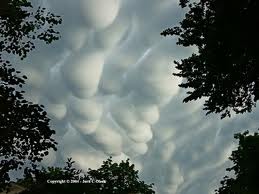
This weather sometimes heralds an autumnal storm – in the mountains or the nearby high desert, anyway. Here near the Hollywood Hills, the clouds just move out over the middle air like spreading coral and change all the light to silver. You can see the sunlight strobing and polarizing through the clouds; slip on sunglasses, and alien rainbows chase themselves over a sky like burning pearl.

Kage always hoped the storm would make it out over the Basin. It wasn’t so much for the rain (of which there is seldom any between April and October anyway) as for the attendant special effects of a late summer/early fall storm in LA. She loved the electrically charged air, the phantom scent of the ocean blowing inland  over the 20 miles from Santa Monica. She loved the wind, whether it was the chill air from the North driving red leaves dancing from the posh trees in Pasadena, or a good old hot Santa Ana blowing heat and madness down from the canyons.

The hillsides have been baking gold since May Day, and by now they smell like spice bread. The streets carry a perfume like milk and incense: some side effect of unburned hydrocarbons in car exhaust, maybe, but it still smells like the temple steps of a shrine to a Harvest Goddess.  Sycamore trees smell like dusty wet velvet, eucalyptus like cough drops, camphor trees like church: the carob trees send down a thick dizzying smell like sex.

And if we get any rain, even the few scattered fat hot drops that are most likely … oh, the scent of warm wet concrete is like nothing else on earth, a smell of youth and running barefoot in hot streets, a smell of ultimate wildness.

When we were girls, we’d roam the Hollywood Hills in weather like this, hiking over the still-undeveloped slopes and dirt tracks up behind the Hollywood Bowl. Hawks would mate in mid air, shrieking over our heads. Deer would race past, spooked by the ozone and air pressure, leaping right over us where we cowered on a hillside, laughing hysterically. We’d carry a bota of water (this was before sippers and plastic bottles – we  are old, kids) and slide down the hillsides to the cool green bathrooms at the Bowl when we needed to pee. At some point we’d give out in the panting heat, and call Momma to drive down Cahuenga and pick us up; which, grumbling, she’d eventually do  …

While we walked, while we waited, the Children of the Sun were born out of the hot grey skies and the pulsing sunlight. The golden granite of the Hollywood Hills formed their bones; coloured tiles, wrought iron, stained glass made their flesh. The yendri leaned in the shadowed canyons and watched us with cool eyes, and the semen-scented wind that blew from the branches of the carob trees came straight from their gardens.

Long, long afterwards, Mendoza was posted to a coaching inn there. It’s on a curve of Cahuenga just North of the fountain at the Hollywood Bowl – a flat-floored dell beside the road, in a grove of sycamore trees, where we had used to perch on stands of rock to avoid the rattlesnakes while we waited and prayed for lightning to strike over Mount Hollywood.

And sometimes it did. You can see the levin bolt in my hair to this day.

Tomorrow: let’s see what the weather does. LA may be burning.

Posted in Uncategorized | Leave a comment