New Victories In Public Space

Kage Baker was not, by nature, a public person. She was shy to the point of paralysis, and abhorred speaking in public. She disliked being touched without warning or by strangers; being adamantly left-handed, she usually couldn’t even remember which hand to offer to shake, anyway. She didn’t even like to make eye contact, between the strabismus and Asperger’s syndrome.

So why become a writer and have to meet the public? Well, Kage didn’t plan on the public part. She became a writer because – like most writers – she had to: writing is something that happens to you, not the other way around. It’s a necessity of mind and spirit, and ultimately of body as well – Kage claimed she got specific twitches and pains if she stayed away from the keyboard too long. (I’ve come to believe this, btw.)

Kage managed book store appearances, especially in a few stores where she knew the staff and felt at home: Borderlands in San Francisco, Mysterious Galaxy in San Diego. She loved the ambience at the Elliot Bay Book Company in Seattle, and the divine Powell’s in Portland. And she always regretted that most of the dear old bookstores in LA, like Chatterton’s and Duttons, closed before she got published.

But book tours – no way. I don’t think she could have managed one, though she would have tried. Conventions were almost more than she could stand, and they only lasted 3 days. But she found ways to cope and have fun, and eventually quite looked forward to some of them. BayCon remained her favourite, but she quite enjoyed various Westercons, as well – especially the one in Las Vegas on the 4th of July, when we watched the entire city apparently blow itself up from our hotel balcony. That was amazing!

Kage’s best public interface, though, was the Internet. Email let her talk to people at two safe removes, and at her own pace; she found it so comfortable that she made several dear and close friends through the electronic aether. Podcasts, webcasts, online chats – all those were technically public venues where Kage could find a safe place to sit, and talk at her own speed. She was very chary of open chat rooms, though, and after one or two flaming experiences, she swore off that medium.

She had better things to do with her time, and specifically turned down several invitations to blog: she felt it would take too much time away from her writing. She finally made an exception for tor.com, where she did a regular blog in the last year of her life: regular reviews of silent science fiction and fantasy movies, called “Ancient Rockets”. She had a grand time finding, watching and analyzing the many, many peculiar silent genre films out there – it was a weird time, I must say. Some of the strangest films I have ever seen. The reviews can now be found in the book Ancient Rockets, from Tachyon. I wrote a couple, too.

One of her largest investments in a public presence, though, was her website: http://kagebaker.com/.  It’s a slightly peculiar site, old-fashioned by current standards: but that’s because it was designed and written entirely by the author herself. Kage had very distinct ideas about how she wanted it to look and read, and she really did not give a fig (or any other euphemistic fruit) for the opinions of professionals. Her only concession was to learn the strict physical rules one needed to observe to make the stuff actually show up in the aether: html and the like, gifs and jpgs and pixils and the sizes of files.

Her solution to this was largely to enlist a teen aged niece to help set up the first pages (thank you forever for that, Katie!) and have me learn the mechanics. Kage herself wrote the text, designed the layouts, selected and/or created the art – and it grew page by page as novel after novel was published. A dear friend (thank you forever, too, Becky!) advised us on hosting and uploading and the like. And we were off.

Kage worked on the site until the end of her life. At that point, I posted a sort of “Temporarily Out of Order” sign on it, and I’ve ignored it for the last 6 years. It was simply to painful for me to try and do anything about it, though I could never let it go: I’ve paid the rent, as it were, and made sure it is unharmed. And now, suddenly, it’s time to bring it back to life and to the attention of the world. I can stand it again.

It’s taken me days to remember how to do it. I had to find the passwords, re-establish a connection to the hosting entity, check all the files; had to learn new systems, too, because the ways to do this have improved in the 6 years I’ve been hiding my eyes. But as of today, the site is once again open for business. Thank you once again to the inestimable Becky!

I have a lot of work to do, bringing things up to date and making all tidy. But I can do it now. Don’t know why. Suddenly I can bear to walk through the pages again – it’s a direct experience of Kage’s mind, as close as we could make it to what she saw in her head. That air has been like breathing razor blades to me, but now – it’s not. I can breathe it and flourish again. I must be getting better.

Also, I would like to make you all aware that Stefan Raets’ wonderful re-read of Kage’s work goes on at tor.com. This week, he kindly published my analysis/explanation/history of how Kage wrote Sky Coyote. You might take a look, Dear Readers; Stefan is about to start on the re-read of Mendoza In Hollywood, and that should be no end of fun.

So there’s all sort of public exposure for Kage, who never wanted any at all. But in the service of the writing, she always did find the courage to say “Yes”.
Posted in Uncategorized | Tagged , , , , | 2 Comments

A Gut Feeling

Kage Baker, as I have noted, was amused by the story of Helicobacter pyloris.

I’m sure this was due to a life-long history of watching Disney nature shows, where everything was given a neotenic expression and narration by Sterling Holloway. Sort of like the DNA in Jurassic Park – that sequence was so absolutely Disney that Kage was in hysterics in the movie theatre.

I am not fond of the damn stuff, however. It not only causes ulcers, it can cause several other digestive ills. It is severely implicated in common gastritis – what mostly people call, utterly inaccurately, “stomach flu”.

Kage called it stomach flu. “I have stomach flu,” she would report balefully, staggering out of the bathroom with black wrath written on her dead-white face.

“No, you don’t,” I would say (sisters will take good care of one another but are not always the most sympathetic people). ” No one EVER has stomach flu. Influenza is a respiratory disease and only affects the lungs and bronchi.”

“Yeah, well, screw you, because I just puked up a lung. So there.” And Kage would retire for a couple of days of living on ginger ale and Pepto Bismal. I would read to her, and fetch Chinese War Won Ton soup when she graduated to food again.

But there really is no such thing as stomach flu, Dear Readers. It’s gastritis, or enteritis, or food poisoning, or an allergy or something.Whatever makes your stomach hurt, makes you throw up, and shake with fever, and ache in all your long bones as your poor muscles try to raise a fever – it’s rarely something fatal. It’s one of those supremely annoying malaise petites that strike out of the dark and make you wish you were dead, without ever guaranteeing you the faintest chance of such a blessed release.

And in case you haven’t guess, I’ve got one. I write now to excuse myself, and to get some satisfaction from dark humour at my own expense.  I had to go invoke a renowned bacterium … now am I served back for my hubris.

Still, I know it’s probably only gastritis. Probably. Usually. I mean, this sort of thing is hardly ever anything serious …

Although, in the heat of summer and self-pity, my money at the moment is on cholera.

See you tomorrow, folks.


Posted in Uncategorized | Tagged , , , | 4 Comments

It’s Never Lupus, But It’s All Grist

Kage Baker enjoyed pretty good health most of her life – until she died of cancer.

She didn’t like the hand that Fate dealt, but she didn’t think it was especially unfair, either. As she remarked, towards the end, “Well, you gotta die of something. There are no real immortals; or if there are, I’m not a member of the club.” So she figured it was a fair cop, if not a final diagnosis she would have chosen had anyone given her the menu.

She had a bad patch of illness as a small child – every rash under the sun, 2 or 3 at a time. She either got more kinds of measles than anyone in the world, or never developed immunity to them. She got rheumatic and scarlet fevers. The only childhood disease she managed to avoid was mumps, and then she caught that when she was 30 years old.

Her tonsils also waited until adulthood to revolt, but that was easily handled. And she stopped catching colds and bronchitis after the tonsils were out, too, so she counted that as a net gain. All in all, a pretty standard health history; with no especially weird or wacky diseases – until she developed the rare uterine cancer that killed her.

Nonetheless, Kage – like a lot of people – enjoyed a mild hypochondria from time to time. Access to the Internet made it ever-easier to browse symptoms and decide what rare maritime diseases of the spleen might be troubling one; she had a good time doing that. Being of sound mind, she could never actually convince herself that she did have liver flukes or abdominal migraines or fibrodysplasia ossificans progressiva – but exploring the idea gave her a lot of information of strange physiological and metabolic processes. And most of that got applied in some way to the Operatives.

I remember a point about halfway through the Company series, when Harcourt Brace had dropped her and  Tor had not yet stepped in heroically to take up her series. Kage was having stomach pains. She complained that her stomach hurt when it was empty.

Said I, “Then you’re hungry, silly.”

“No, eating hurts too, after a while. I think I have an ulcer,” Kage explained. “I’m under a lot of stress right now, with the writing.”

“Stress doesn’t cause ulcers. They’re caused by an infection with a bacterium called Helicobacter pylori. That was discovered in 1982, by some Australians,” I informed her.

“Really?” Kage was intrigued beyond a stomach-ache.  “How does a bacterium live in all that stomach acid?”

“It neutralizes acid, then hides from it.. You probably don’t have it, though. Your stomach hurts because you’ve been living on cherry Coke and Doritos for the last month.”

“That was good enough in high school!” she said.

“Yeah, but it’s careless when you’re past 30. Let’s go get some chowder.”

And over bowls of the (absolutely fabulous) clam chowder at The Splash Cafe in Pismo, Kage had me explain how Helicobacter pylori did its evil work. How it burrows into stomach lining cells, hides from acid under the mucus layer, possesses both chemical acid defenses and flagella that let it scurry about with great agility; how it can change shape from a spiral to a coccoid form; how it is extensively adapted to living in human beings.

She was fascinated. The idea that the belly aches attributed from classical times to stress, bad temper, choler and yummy spicy foods were actually caused by a well-adapted bacterium vastly intrigued her. As did the idea that it could change shape and hide in the very cells it was victimizing, and had taken such a loooong time to identify …

A few months later, she used the habits of Helicobacter pylori as the basis for the Operative-killing disease that Victor the Vector eventually looses on the evil Plague Cabal. That astounding scene at the end of the Great Dinner in Sons of Heaven, its dark baroque power based on a conversation about bacteria over clam chowder …

All due to poor eating habits, stomach pains and a little hypochondria. Which just goes to prove, yet again, that minor aches and pains are no reason not to sit down and write. And that absolutely everything is grist for the writer’s mill.


Posted in Uncategorized | Tagged , , , , | 3 Comments

Life On A Road With Kage

Kage Baker, as I have often observed, was a born tourist. She was a happy spectator in the world, any and all of it, constantly seeking new things to witness.

She loved to watch things, especially through the windows of a moving vehicle. Somehow, roads moving past a window was her most favoured venue of observation. Kage was fonder than a Labrador retriever of rides in the car; and like a dog in a cartoon, she would hang her head out the window as far as she could to drink in the landscape and wind.

I’ve no idea why she never fell out – her parents apparently relied on the crush of small kids in the family cars to keep Kage in place when she was little. Seat belts didn’t come along until we were in our teen years; and anyway, Kage always unfastened hers when she wanted to lean out and get closer to something. Like a burning hillside beside the road, or a feral cow, or the spray from a seasonal waterfall alongside the narrow cliffside ribbon on Highway 1. As an adult, she usually rode shotgun, and there was really nothing to keep her in place unless I put out a panicked arm and grabbed her braid …

But she so loved traveling in the car: exploring roads and old roads and ex-roads and game trails that might once have been roads. My threatening to refuse to take her anywhere unless she promised to stay inside the car worked often enough to keep her alive. She never actually fell out while the car was moving at speed. It was a near thing a few times, though.

Kage was so enamoured of the atmosphere of The Road that she liked to drive with the windows open, too. Mind you, in our youth we didn’t have cars with adequate (read: any) amenities like air conditioning – it was 4/80 cooling for us, which means roll down all 4 windows and drive 80 miles an hour. This works pretty well, except when it’s raining or there’s a gale blowing or it’s freezing cold. It works pretty well then, too, really – it helps keep you awake. And if your windshield wipers also don’t work real well, then driving at speed will clear the water from the glass better than a squeegee.

This is also handy when your electrical system is so compromised that you can’t turn on too many things at once – like, adding windshield wipers to the load of head lights and radio makes the alternator light pulse on the dashboard like the green heartbeat of Cthulhu. And we had to have the radio on. Kage couldn’t travel without music.

Windows were also very important, obviously. It took a lot of experimenting and research before we bought cars with any sort of window tinting, at least on the front. Kage didn’t want colours compromised or views blurred. You think it doesn’t matter? Oh, you are so wrong, Dear Readers! Kage had hated the primitive blued tinting of the vehicles our parents drove; she didn’t get reconciled until some of the new sunscreen coatings came along in our adulthood. Our first few cars had NO tinting, quite deliberately. And polarization was right out.

Her favourite vehicle of all time was the Dome Car on the Southern Pacific railroad lines between Los Angeles and San Francisco and San Diego. Those were the absolute epitome of comfort, elegance, visibility and technology, for Kage. The sleeper cars on the overnight Coast Starlight came in a close second; but she’d have ridden sitting up the whole way to the Canadian border if she’d been offered the chance in a Dome Car.

The story “Her Father’s Eyes” is, in part, a testimonial to the magic of the Dome Cars.  Most of the action takes place on one, and so magical are those carriages that the Fair Folk themselves travel on them. It’s a faerie Lord and Lady and their little changeling boy that the heroine of the story meets as she rides the Dome Cars with her own, mortal parents; it’s her father’s gunslinger eyes, which she has inherited, that allow her to see them for what they are. Part of that story is also baby Kage, riding the night time trains on her way to the mysteries of San Francisco, on a trip that would haunt her for the rest of her life.

Summerland, where the Dome Cars stopped to allow access to the Sidhe, does not, and has never actually had, a train station …

Except, as we passed it one cold December night on the train, it did. Kage described it to me as we passed it: the fresh-painted wooden arches of green and gilt designs, covering the smooth stone benches for waiting passengers; the dark grey slate roof tiles. The arches of oak trees that lined the single line of tracks heading off on private siding into the hills beyond, and the long, shining, expensive automobiles that came to deliver and pick up travelers.

All because she idly wondered, as we passed Summerland that night, “What kind of story happens here?” and I said, ‘Trains stop where there has never been a train station. Who gets on?” And Kage answered, “Faeries.”

Life on the road with Kage. I miss it, Dear Readers. I miss it more than day’s telling.

Posted in Uncategorized | Tagged , , , , , , | 4 Comments

Doing Nothing Between Fire and Flood

Kage Baker harboured a guilty excitement about fire season in California. It’s not good when the hills catch and walls of fire sweep down the golden oat and oak covered hills; and she had the native Angeleno’s inborn fear of the sight of smoke rising anywhere on the rim of the wide Los Angeles Basin.

But fire is undeniably exciting – waves of flame like a burning sea are beautiful, as are the night-time hills glowing like they’re lit from within with faerie riots. The very smell of the native plant life – oak and mesquite and manzanita and cottonwood and sycamore, and all the scented soft weeds that wait for the fires just so they can seed – it can smell like incense and fireworks, and it always made Kage’s eyes light up in mingled panic and excitement.

Technically, fire season started August 1st, I think. That’s when the Super Soaker planes we’ve borrowed from Canada got here; though I am at a loss to explain why snowy Canada has Super Soaker planes and flammable California doesn’t … regardless, we’re already on our 5th or 6th major fire here in Southern California, and Goddess Pele herself only knows how many in the state as a whole. Big Sur has been burning for days now, and in those narrow vertical canyons, a fire can literally burn for months – the last time, it started on Father’s Day and they got the last holdout blaze out in the following December.

Santa Clarita, Sylmar, bits of the Grapevine, countless dry fields and empty lots and freeway verges and pallet yards and candle factories and jerky manufacturies have flared and burned. The 10 and 15 between San Bernardino and Vegas keep getting closed as the hills burn and bridges melt. And right now, a new fire near Arrowhead, off the inappropriately-named Pearblossom Highway, is burning out of control – more than 1,000 acres so far. No cities in danger, but those thorny canyons out there are inhabited by lots of hardy pioneer types who treasure their edge-of-the-desert privacy. Except, of course, when it burns.

In the meantime, the plumbing infrastructure of Los Angeles continues to burst at random. We lose a large main on average once a week – some street gets flooded out for a couple of days, until the DWP can find the OFF switch, and we get some weird water damage in the midst of our urban drought. In 2014 a parking structure on the UCLA campus got converted to a swimming pool. Last week the very Hollywood Hills streets where Kage and I used to Trick-or-Treat became a rushing stream for 3 days: I watched in amazement on the news as houses whose driveways I once ran up and down were being sand-bagged.

And half a block down from my family’s house, right now, a hitherto- unsuspected pipe is gushing water into the closest intersection. Fire trucks and DWP truck are gathered, pondering the problem; a small earth-mover just went down the street, off to dig up the offending main. That means that soon we will have a crater lake, I think. Luckily, the street slants downhill away from us, so the flood is running away to the south and east of us; bad luck for the next few blocks down, though. Maybe they can re-route it into the LA River; it’s only 4 blocks away.

It is blocking the main entrance of the local grammar school, but school doesn’t open for a few weeks. Even the DWP should be able to get it fixed by then. It’s almost a shame, though, because (having been a kid in these streets) I know the local children would have enjoyed it. Feral water is always more fun than a pool or a hose.

Oh, and the Olympics are on and off all over the television; and political gaffes and scandals keep erupting as well. The Rams are revving up in the Coliseum here, after decades of absence, sparking all sorts of hysteria; the Dodgers are busy at their their annual suicide, provoking still more hysteria a few miles away in Chavez  Ravine. When that ends tonight, they’ll shoot off fireworks – and we may get another brush fire!

The point here, Dear Readers, is that I haven’t gotten a single bit of writing done today. Nor am I likely to. But at least I’ve kept my hand in, explaining why here. I must admit, it’s been a lot more fun to watch the local fires and floods than sit down and work on a story – so I’ve spent my Sunday as a slug, eating Bomb Pops and watching the news. Maybe you’re having a similar Sunday.

Fires and floods in California – never a dull moment. Even Kage stopped now and then to watch days like these.

Posted in Uncategorized | Tagged , , | 2 Comments

Resources

Kage Baker  was a hoarder of resources.

We grew up in  houses lined with books, a great proportion of which were either structural supports  or insulation, via floor to ceiling bookcases. We were stunned (and a little creeped out) to discover friends’ houses did not have book cases in the kitchen or the bathroom – and that our friends were likewise disturbed because ours, did.

The space immediately around Kage’s work area was always the Current Project Library. That’s where the books, magazines, photos, posters, found art, fossils, notes on cocktail napkins, and prophetic fortune cookie slips hung out while she wrote. Whatever was stored there was related, somehow, to whatever she was presently writing; it was a Bermuda Triangle for library books, and we had to troll for escapees at regular intervals in order to placate the Library Police.

One side was devoted to her own brag shelf – the ever-expanding shelves that held the hard copies of her published works. Because with every book, it got harder to remember exactly who said what to whom, and when, or if they had said anything at all or had she only said it to me? What had she named Joseph’s talky maternal aunt? How about the Residence Floor chambermaid in Gard’s fortress, and did she have horns or wings or both?

It would be nice to say that Kage worked out some brilliant method of keeping track of all these resources; but that falsehood would be so huge it would warp space. She continued all her life to work on the sedimentary theory of filing; the weight of the strata of information on her desk could also warp space. I once had wonderful study habits,from all the years of training at the hands of the Immaculate Heart nuns: but those ladies somehow failed to impress anything on Kage but a boundless appetite for primary sources … and now my desk area, too, is a labyrinth of references and resources.

And it’s all Kage’s doing.

You might also think that the use of the Internet would have reduced the drifting continental plates of data around Kage’s desk. But no! She wanted even the electronic resources right to hand, so her bookmark list was immense; she had to trim it at intervals because otherwise it had too many columns to fit on the monitor screen side by side. She usually had 6 tabs open at once, which she was shuttled back and forth between as she worked.

Personally, I think that after a lifetime of intermittent strabismus, Kage’s brain had actually learned how to process vision from each eye independently. I think she really could see more than one thing at once. I don’t want my own current vision nightmare to go on long enough to do that, but if it happened I would not complain … the vision of the doe, or the bee, or the mantis shrimp would be something wonderful to have.

In the meantime, I have to make do with the decaying binocularism of my species.; also with flat resources, whether they are pages or screens. I have made a real effort to prevent the accumulation of buttes and moraines and deltas all around my desk, though. One of the ways to make the reference piles less permanent is to dedicate a portion of every day to just checking my favourite information sites – dependable aggregators, reputable scientific magazines, and both the most and least sane of news outlets. I check the New York and the London Times; but I also check the Weekly World News and fark.com. It gives some balance, you know?

I also check out new ones from time to time, following hints of interest in articles I find in ordinary places. You never know when a microbiologist will inexplicably link to a nifty new book on neolithic land modification. New shades of blue and black have recently been identified in nanotube materials, but I found out about them on fashion sites! There’s a Fanta can on the bottom of the Marianas Trench, and it was Atlantic Magazine – pretty  much a bastion of literary and cultural comment – that so informed me.

So I though it might be fun to share a few of the recent odd ones with you, Dear Readers.

Also from the Atlantic, here is an article on Bruniquel Cave, in France. It holds what may well be a Neanderthal ritual site – i.e., a temple, long before Home sapiens sapiens got into the act. Or it might be a rock garden. Or a playground. Or an exercise in OCD and symmetry; but in any event it is an example of abstract thought from a source unconsidered by most. Wow!   http://tinyurl.com/hfwmvkq  

Here is a nifty article from Ozy, which describes itself as “fresh, global, humble” and takes its name from the poem “Ozymandias”, which it interestingly thinks is an admonition to blow your own horn … anyway, the article is about a new club drug: theobromos. Apparently, cutting edge teens world-wide are snorting chocolate for a buzz. Kage would have hysterics; all a non-Operative is likely to get out of this is irritated sinuses and a nice taste at the back of their mouth.    http://tinyurl.com/jp67tkp  

Last, take a look at a charmingly insane and geeky site: Spurious Connections. Tyler Vigen uses mathematical wizardry to find correlations between unrelated topics: proving beyond all doubt that “correlation does not imply causation”. My favourite so far is the third graph down, correlating cheese consumption with those who die from being entangled in their bedsheets – because my sister’s Corgi always mummifies himself in his blankets whenever you give him cheese. Not dead yet, though.   http://tylervigen.com

There are stories everywhere, kids. If you’re resourceful.


Posted in Uncategorized | Tagged , , , , , , | 4 Comments

Friday, Friday, Friday!

Kage Baker loved Fridays. Even after leaving school, even after escaping the back office Pink Collar Ghetto to work at her writing at home, she treasured the observance of the weekend.

She used to set the alarm clock to go off even on Saturday morning, just so she could slap it quiet and go back to sleep.

It might well be the only day of the week of which she was sure – you do lose track, working at home – but sooner or later during the day, she’d notice. And then it was  Strike the bell, watchman! The sun’s over the yardarm, the rum locker’s open, it’s grog for all hands and time to read out the Articles of War for the pious! And assorted other misrepresented maritime activities.

When it was Faire season, during our youth and middle age, Friday was when we took off for our weekends in the 16th or 19th centuries; we spent the week unpacking clothes, washing clothes, packing clothes again – then on Friday, it was off on the open road with a vehicle full of beer and props and weird sandwiches for dinner. The weekend party began when we turned out of the driveway and headed off to time travel, and ended sometime after midnight 3 days later.

Outside the season, Friday was as opposite to the creative rough life as Kage could make it. We went out to restaurants: real ones, with cloth napkins and waiters who wore aprons wrapped round themselves like kimonos; three forks at table, separate glasses for wine and water, sea salt and coloured pepper.

She drank cocktails so classical she usually had to teach the bartender how to make them, things like Ramos Gin Fizz and Kir Royale.  Planter’s Punch and Singapore Slings are no longer made automatically; Kage taught bartenders across the continent how to make a proper Sidecar, and knew how to specify which number Pimm’s cup she wanted. She liked liqueurs like maraschino and falernum; even though she had to make  falernum herself, when it became impossible to find any imports. And she drank absinthe before it was legal or distilled again in the US, even though she had to build her own absinthe kit in order to do it right.

I still have the kit, of course. It’s walnut and brass, lined with (what else?) emerald green velvet covering carefully shaped spaces that Kage carved out herself to hold glasses and spoons. It’s filled with all the doohickies and gewgaws Kage collected in order to partake of wormwood and decadence in proper style. I take it to Dickens Fair, when I make it up there; there is a select circle of people who like to lie around the Parlour late in the day and be languid and wicked. (Or really, really tired tired … they look cool while they do it, which is what matters.) That kit is the quintessential Friday kit; it holds all the best things that Kage loved about the weekend – performance and luxury and exotica, with a broad hint of elegant sin …

These days, I rarely know what day of the week it is; my desk calendar shows 2 days at once, so I am always in some doubt as to which of those 2 is Today. And now I know why Kage clung so determinedly to the concept of Friday, and the weekend: you need that contrast to really appreciate either side of the divide. It’s a good way to fight depression and ennui – otherwise, you take the chance of slipping into the Slough of Despond and just floating around aimlessly with jellyfish made from fruit no one likes.

That’s a boneless Fate. And I’ve been fighting it for the last 3 years, not with complete success – but not with total defeat, either. I figured all this crap with my eyes would have to be a Last Stand for me, a place where I had to settle my feet and prepare to stand my ground. All metaphors aside, unless I could find a way to work despite this latest absurd calamity, all my efforts of the last 6 years were going to vanish like spare socks left behind on a Friday night bug-out.

That’s how I’ve taken it, Dear Readers. I’ve found ways to combat the light that dazzles me, and yet get enough by which to see the damned keyboard. I’m rationing my computer time and doing the writing first – so when my eyes give out, I can still have gotten something done beside lolling around between Scientific American and fark.com. In the interests of not doubling the traffic accident rate in Los Angeles, I’m not driving – and it’s amazing how much more time you have when you’re not running off to check out the goodies at World Market and Michael’s!

The biggest help has been Kimberly, of course. She made my eye patches, and she makes it possible for you, Dear Readers, to read what I manage to write. She’s a wonderful editor. And she can spell. You have no idea the horrors from which she is saving you all …

Kimberly keeps me moored properly in time, too, so I can enjoy Friday again. And now, Dear Readers – I think it’s time for a drink!


Posted in Uncategorized | Tagged , , , , , | 2 Comments

Looking Around The Corners

Kage Baker was a cautious person. She’d have been a happy conspiracy theorist, except she didn’t trust other people’s conclusions.

She disliked change. She was suspicious of new things. She preferred to check out a situation from afar before she tried it out; the Internet was one of the best things that ever happened to her. She even used to check out new routes to places via Google Earth: she’d map out the road, then zoom in to just above road level and travel the whole thing in VR, memorizing landmarks not dependent on season or weather.

I don’t know anyone else who does this, although I know there is a whole class of people who examine Google Street View for anomalies in the photos. Kage was the only person I have ever known who actually used it to learn landscapes. “I know that hill”, she’d announce, pointing as we drove. “We’ll find a Shell station just around the curve and we can get cold drinks.”

It might be a BP or a Valero by the time we got there – those Google photos are always several months behind – but it would indeed be a gas station. A couple of memorable times it was a charred ruin; which, although not useful, was interesting and kept Kage speculating on its fate for miles afterwards. But this kind of research made her familiar with vast stretches of various cities, in various seasons and even years – she saw them in the kind of transparent overlays you used to find printed on tissue paper in the encyclopedias. Only, these were in Kage’s head.

It made for the fascinating experience of having her describe streets we were traversing in real time, but that technically were no longer there. Kage, happily leaning out the car window, would describe to me the buildings that used to be there – actually, I don’t actually know where she was, in real life. I mean, I was driving down a San Francisco road in the early 2000’s, but I think Kage was leaning out into one in the 1880’s. She did this on foot, too, which made me extremely nervous – I was always afraid she was going to step off a curb into another century; one I couldn’t reach into to catch her.

And yet, she was indeed cautious. This pervasive confusion of temporal zones was the direct result of Kage’s determination to be prepared, to know a subject thoroughly before she set foot in its environs. It wasn’t her fault she saw around the corners, or that the 19th century Sanborn Fire Maps were as real to her as Rand McNally Road Maps – of which, by the way, we had a bulging PeeChee folder in the car at all times.

Nights, stopping on road trips, she’s take out those maps and go over our daily mileage in great satisfaction – marking off the miles we’d traveled, the long path she had visualized before we left our front door, now accomplished precisely according to the parameters on the maps. Careful, you see. And the maps were realer to her than the road we were on, I think – our path was only really real when it could be checked off against the record.

That was how she did her writing, too. She was, mostly, an outline user. Authors get asked a lot how they manage the whole plot thing: do you plan it all at once? Do you have an end in sight when you start, do you have an outline or are you a bibliomantic navigator? Some writers swear by the outline method, and sternly abjure young authors to make their maps and stick to them – others praise randomness, and encourage novices to go haring off in every enticing direction. Every writer has to experiment and choose their own way; I think that those who cannot make up a large part of that crowd who just never finish a story.

They may be having a great time on the way, though … for years, Kage’s stories were utterly open-ended, with never even the intention of an end. She wrote every day, adventures for her characters that just went on and on and on. I read what she wrote, and we were both quite happy with this system. One of those stories (that we wrote together) is now in New York, with Tor – I finally nailed it to a frame, like a wild rose to a trellis, and grafted an end on it. But it was initially born via Kage’s habit of dancing in the street and seeing where we ended up.

She did keep an element of that in her proper works. She was always willing to take a sudden unexpected side road. The entire plot of “Standing In His Light” was re-worked when she discovered that Vermeer was suspected of using a camera obscura. Edward Alton Bell-Fairfax was meant to survive Catalina Island, until Kage learned about the anomalous Union barracks there.  “What The Tyger Told Her” was derailed by a BBC commercial. Kage was always worried about entering a strange room, but a strange dimension was a piece of cake.  Her stories go off in all sorts of directions, because she examined every direction she could find.

And looked around all the corners.


Posted in Uncategorized | Tagged , , , , | 5 Comments

Surfaces … Misty Water-Coloured Surfaces …

Kage Baker was fascinated by the differences between surfaces and interiors. That constantly occurring mystery – what lies beneath? – struck her as one of the more important questions in the general philosophy of life.

Maybe it was because she trusted nothing very much; she always suspected there was something untold, unrevealed in what she encountered. Maybe it was because she felt that the more you know about something, the more complex it becomes: not a bad thing at all, but something that was brought home forcefully to Kage every time she started research on something. No matter what she thought she needed for a story, the actual information presented an entirely new and different story than what she had expected. Many of her stories were utterly transformed in utero by those discoveries.

This has come to the surface of my own mind (ha ha) because I just finished an article on How Kage Wrote Sky Coyote, for Stefan Raets’ wonderful re-read of The Company Series, on tor.com. (It should be published in the next week or so.) The nature of surfaces – truth versus reality – looms large in Sky Coyote.  What you see, as opposed to what you get, is one of the main themes of the novel. That entire world is painted on layer after layer of delicate scrims, hung in front of a spotlight – one by one, they are whisked aside, torn down or go up in flames like flash paper, leaving the audience blinded by the sudden light. And that has enormous consequences for everyone.

The idea was also on my mind because of the simple physical difficulties in producing the article at all. I am essentially one-eyed at the moment; and while I am sporting some nifty eye patches, I am also finding that coping with surfaces has become a challenge in dimensions. Like, there are either too many or too few.

My depth perception is seriously hinky. When I walk, the ground beneath my feet appears to be composed of thin layers, which melt to reveal one another as my foot approaches a spot to settle. It looks like a thin layer subsumes under the approaching weight of my foot to show me the actual floor a couple of inches below it. Since this is an optical illusion, I either stomp down on a surface that is already right under my foot, or I hesitate to step down at all and miss the step. I lurch a lot, and carom off doorway edges. The cats VTOL around my unsteady progress like dolphins in a ship’s wake.

I also keep trying to reach through objects, because my depth perception is as screwed vertically as it is horizontally; I tend to ram my hand into something I think is 6 inches further away than it really is. I straight-arm glasses into mid-air. I tried to put a jar of mayonnaise away in the fridge the other day – I put it firmly on the shelf with both careful hands and let go. Unfortunately, it was still sitting on thin, thin air, and plummeted to the floor – where the lid popped off and mayonnaise fountained everywhere.

I also think moving objects are right on the end of my nose. The whirling overhead fan in my bedroom keeps appearing, to my incautiously-opened eyes at night, as a writhing bug on the edge of CPAP mask: much screaming results, as well as flying CPAP equipment. Putting on my glasses means risking ramming them up my nose. I can’t be sure how far down the food on my plate is, or how far away from my mouth a laden fork might be: I’m mostly eating with a spoon, rather than get a fork in the face.

I’m getting better, though. I’m learning things, and of course I have Kimberly to assist with the writing. There is nothing to cure writer’s block like discovering you CANNOT WRITE – no, really, it’s physically impossible, so sorry, you’re a literary gimp now. So I’ve adjusted and found alternative ways; and finally things are working a little.

This has been getting worse for a few months, Dear Readers; and I’m not scheduled to see the specialist until September 8th. Cataract removal will be scheduled as soon as I can badger someone into it after that – nor am I picky about the method. I have an historian friend who could probably be persuaded to try pricking my eyes with a needle (a medieval method) if I whine at him enough …

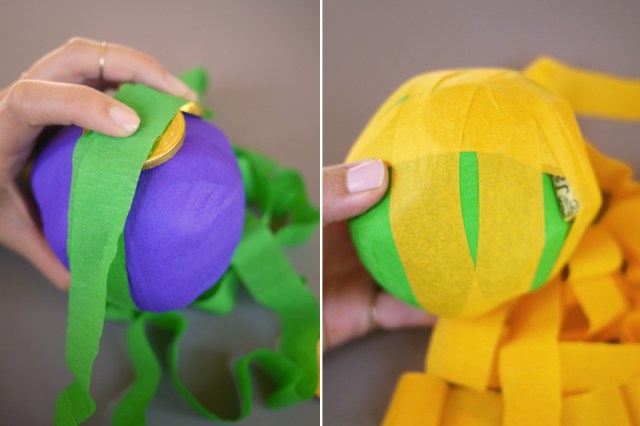
In the meantime, though, I soldier on. I am hoping the exploration of my condition will be interesting and amusing – I am learning amazing things every day; when the world appears to be made of layers of tissue like a paper-wrapped surprise ball (Hey, Becky, remember making those for Dickens Fair?), what will appear next is a constant wonder.

However, Dear Readers, I must confess – in the Land of the Blind, the one-eyed woman is not Queen. She’s bruised, squinting and tilted. And her feet are covered in mayonnaise.


surprise ball


Posted in Uncategorized | Tagged , , , | 2 Comments

Happy Lammastide

Kage Baker always celebrated Lammas with pizza. She said it was the closest thing she could get to a flaming wheel, which was an image she connected with the holiday – the Sun In Splendour, bonfires, bale fire on hilltops, a thousand dancers in a ring … with torches. Pizza matched this ritual imagery in her mind, and so it became the ritual food for Lammas.

And since the Celts tended to mark time by nights (not days), most of their holidays ran over two solar cycles. That gives you an extra day to party, in Kage’s judgement; and really, one can never have too much pizza. It also gives one an automatic pass if one does not manage to celebrate on August 1st, which I did not manage to do. So, Happy Lammas now, Dear Readers. Have a pizza tonight.

Setting it literally on fire is not necessary. It’s not even very possible. Unless you are very fond of anchovies and use very oily ones … that sort of works. I speak from  personal experience, by the way, and am happy to pass on my dubious findings to the rest of         you …

One of the points of this is that celebrations are infinitely mutable – you can do anything with them. You can make them out of anything. You can accessorize them any way you like. The only goal is to establish the sacred in life – and while pizza may not seem like a sacred food to most people, it can be. Its role as the sun, as the burning wheel that was holy to Kage and I, as a basic bread-stuff, as a food usually consumed in company – all lend themselves to its inclusion in a sacred space. Kage said it depended on how you viewed God, and what He liked to eat. Pretty basic, really.

And if beer (as per Benjamin Franklin) is proof that God loves us and wants us to be happy, then how can pizza be any less? That was Kage’s reasoning, anyway. She said she had no idea what skittles were, but rather thought they might be shoe string potatoes – which she hated. So pizza was better.

Regardless of what (and if) you eat anything to celebrate Lammas, I’m taking this opportunity to try an end run around my eyes. I am currently wearing an eye patch on my left eye – one that fits over my actual glasses, so I can still see out of the right eye which is not misbehaving. The eye patch, though, protects the left eye – and its spreading cataract – from bright light, which had been causing daily migraines. It also eliminates the double visions and colour variations caused by my easily-bamboozled brain trying to coordinate the input from my wildly differing eyes.

Plus, the patches are cool beyond belief. Kimberly – always the crafty one of us – found wonderful patterns on line, invented by some lady who had to make them for her visually handicapped child. They are soft, light cotton cloth; Kimberly chose lovely small designs in dark blues and blacks, and I am attaching stick- on gems to them. Sparklies! After wearing them for a week – and they keep getting better, as Kimberly improves the pattern – I can now type a little, and read for about an hour at a time. Gods and goddesses, what a relief!

Because my typos are many – and no amount of clever eye patches are going to improve my native inability to spell – Kimberly is editing these entries before I post them. She is patient and clever and incredibly gracious to do this. Once again, Dear Readers, I cannot stress enough the vital necessity of choosing your siblings well; you never know when you  will need them for something remarkable.

Tomorrow I hope to expound upon the mutability and impermanence of surfaces. All mine have become weird in the extreme.

And a happy Lammas to you all!

Posted in Uncategorized | Tagged , , , , | Leave a comment